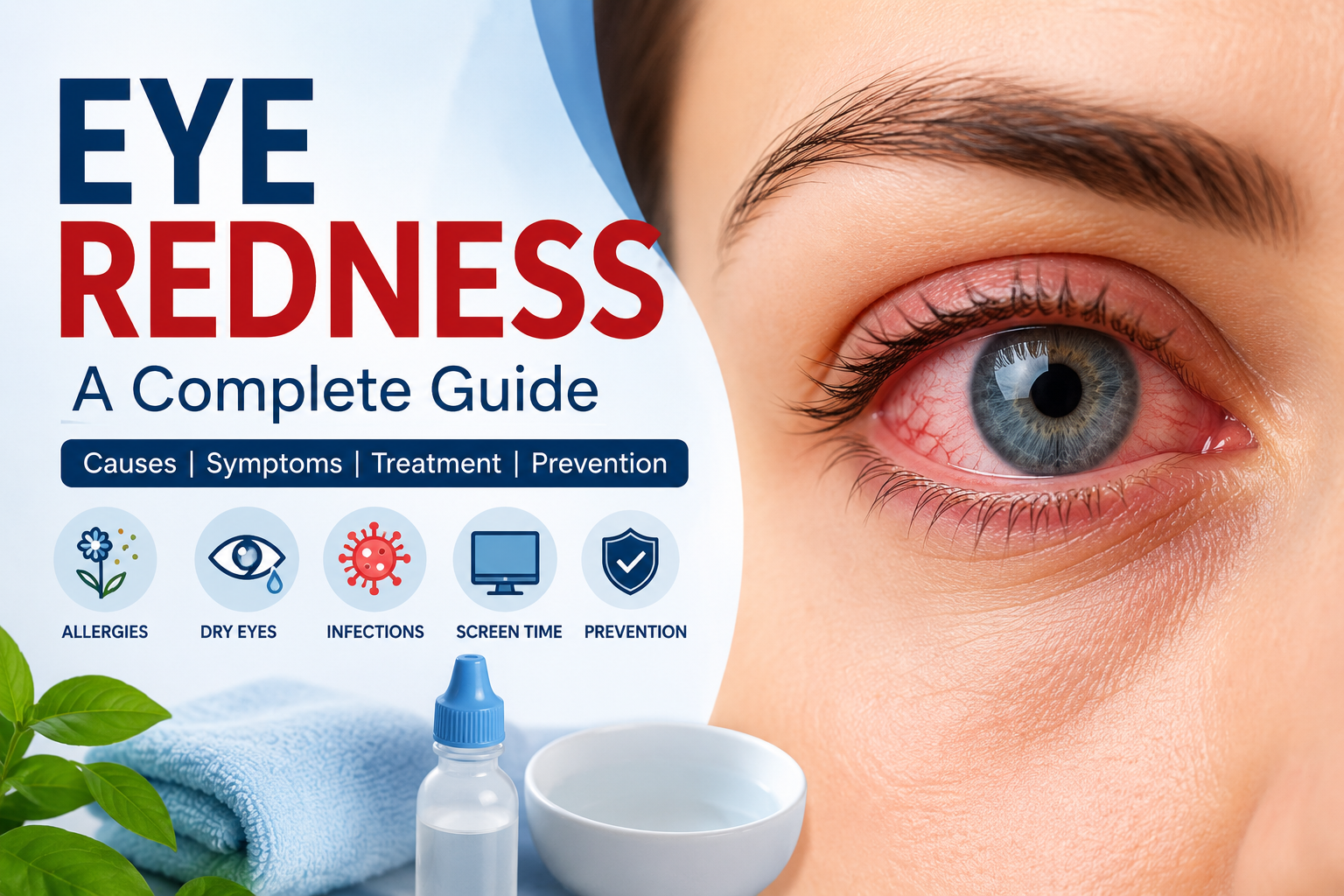
Eye redness is a common eye problem that happens when the small blood vessels in the eyes become swollen or irritated. This makes the eyes look red or bloodshot. Common reasons behind this condition include lack of sleep, too much screen time, allergies, dryness, irritation, or infections. Sometimes red eyes are mild and go away on their own, but in some cases, they may be a sign of a more serious eye problem, especially if there is pain or blurry vision. Understanding eye redness causes can help you know when simple home care is enough and when medical attention may be needed.
Waking up with red eyes can feel uncomfortable, but it is a very common condition. Seasonal allergies, dry eyes, eye strain, and long hours on digital screens are some of the most common reasons behind red eyes. Eye redness can affect comfort and daily activities, so it should not be ignored if it continues for a long time. In this blog, we will discuss the main causes, symptoms, prevention tips, and simple natural remedies that may help reduce irritation and redness in the eyes.
A Complete Guide to Eye Redness
Red eye is a common eye problem that makes the eyes look red, irritated, or bloodshot because the tiny blood vessels on the surface of the eye become swollen or enlarged. It may affect one or both eyes and can appear suddenly or slowly depending on the reason behind it. Along with redness, some people may also experience itching, eye pain, swelling, watery eyes, discharge, or blurry vision. Red eyes are often caused by dry air, dust, smoke, sunlight, allergies, lack of sleep, too much screen time, or wearing contact lenses for long periods. While many cases are mild and temporary, redness with pain or vision problems may be a sign of a serious eye condition.
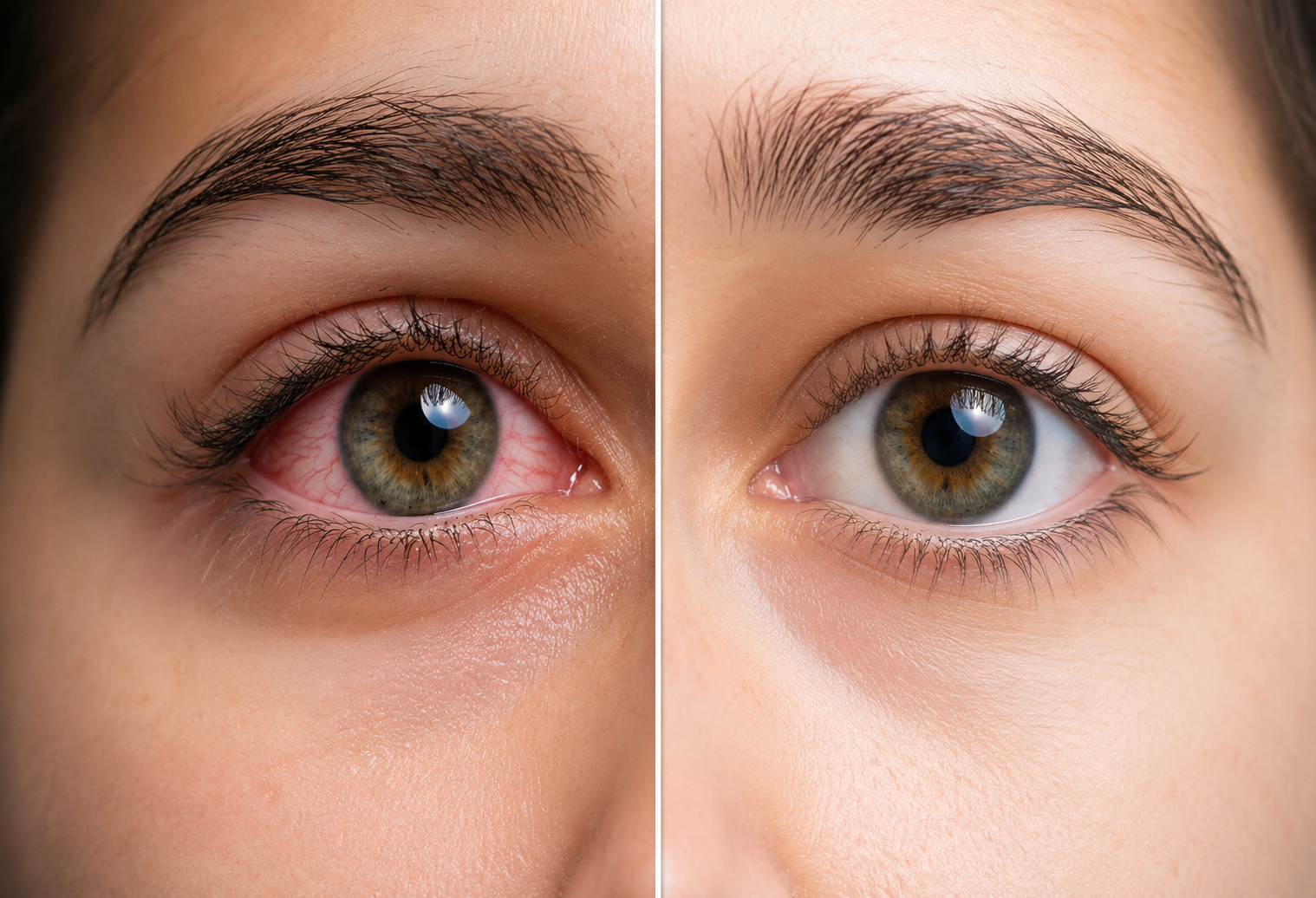
Eye infections are another common reason for red and swollen eyes. Conjunctivitis, also called pink eye, is one of the most common eye infections and may happen because of viruses, bacteria, or allergies. Bloodshot eyes can also occur due to subconjunctival hemorrhage, which happens when a small blood vessel breaks under the white part of the eye. This may happen after sneezing, vomiting, heavy lifting, straining, or an eye injury. In most cases, it heals naturally within a few days. Understanding the causes of eye redness can help you know when simple home remedies are enough and when it is important to see a doctor for proper care.
What are the main causes of eye redness?
Eye redness is a common eye condition that can develop because of irritation, inflammation, allergies, infections, or underlying eye diseases. Red eyes usually happen when the tiny blood vessels on the surface of the eye become swollen or enlarged, making the eyes appear bloodshot or irritated. In some cases, eye redness is mild and temporary, while in others it may be linked to serious eye problems that require medical treatment. Understanding the different causes of eye redness can help identify symptoms early and reduce the risk of complications.
Eye Allergies
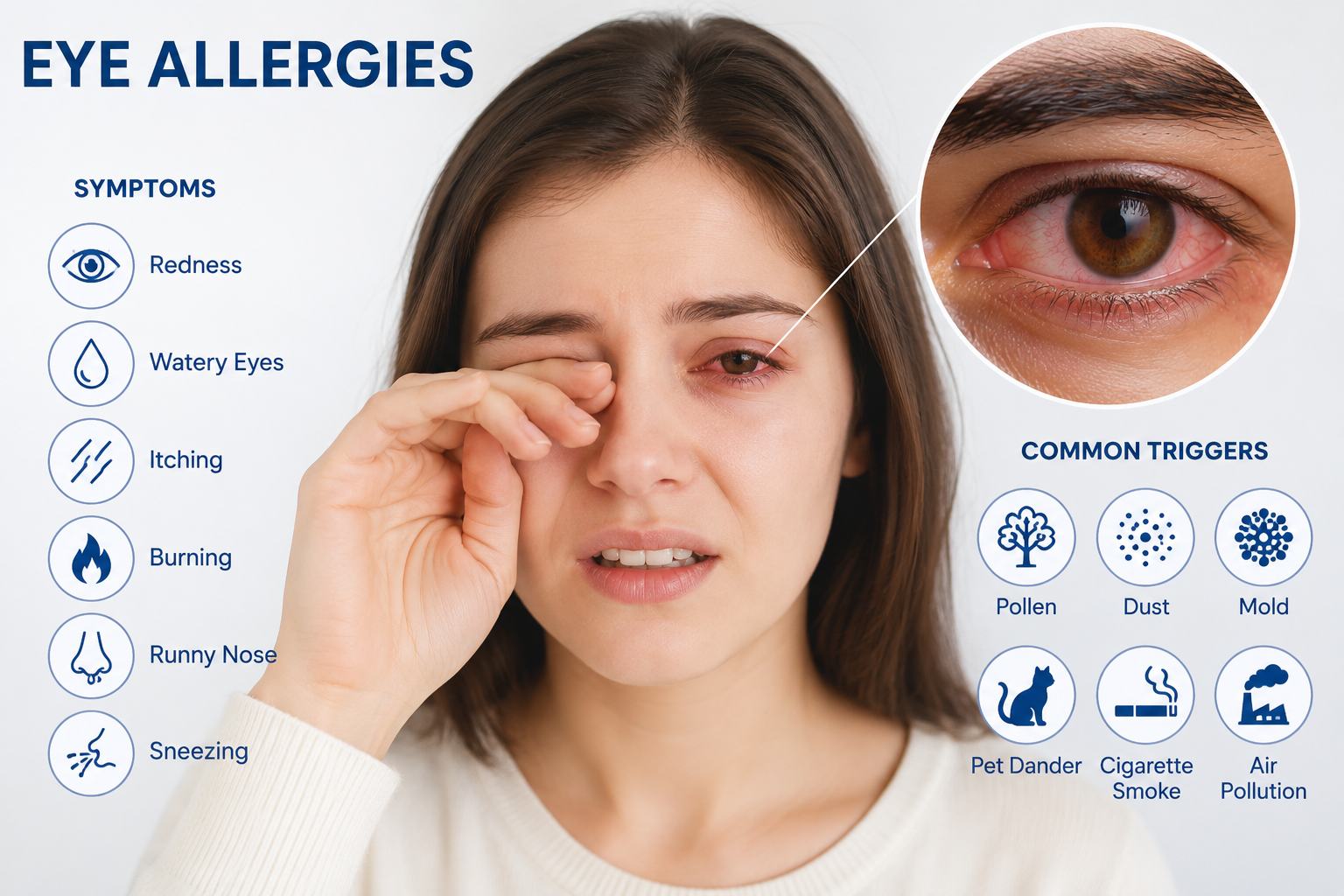
Eye allergies are one of the leading causes of red, itchy, and watery eyes. Allergic reactions can make the eyes swollen and uncomfortable while also causing burning, tearing, sneezing, and a runny nose. Common allergy triggers include pollen, dust, mold, pet dander, cigarette smoke, and air pollution. Seasonal allergies often worsen eye irritation and redness.
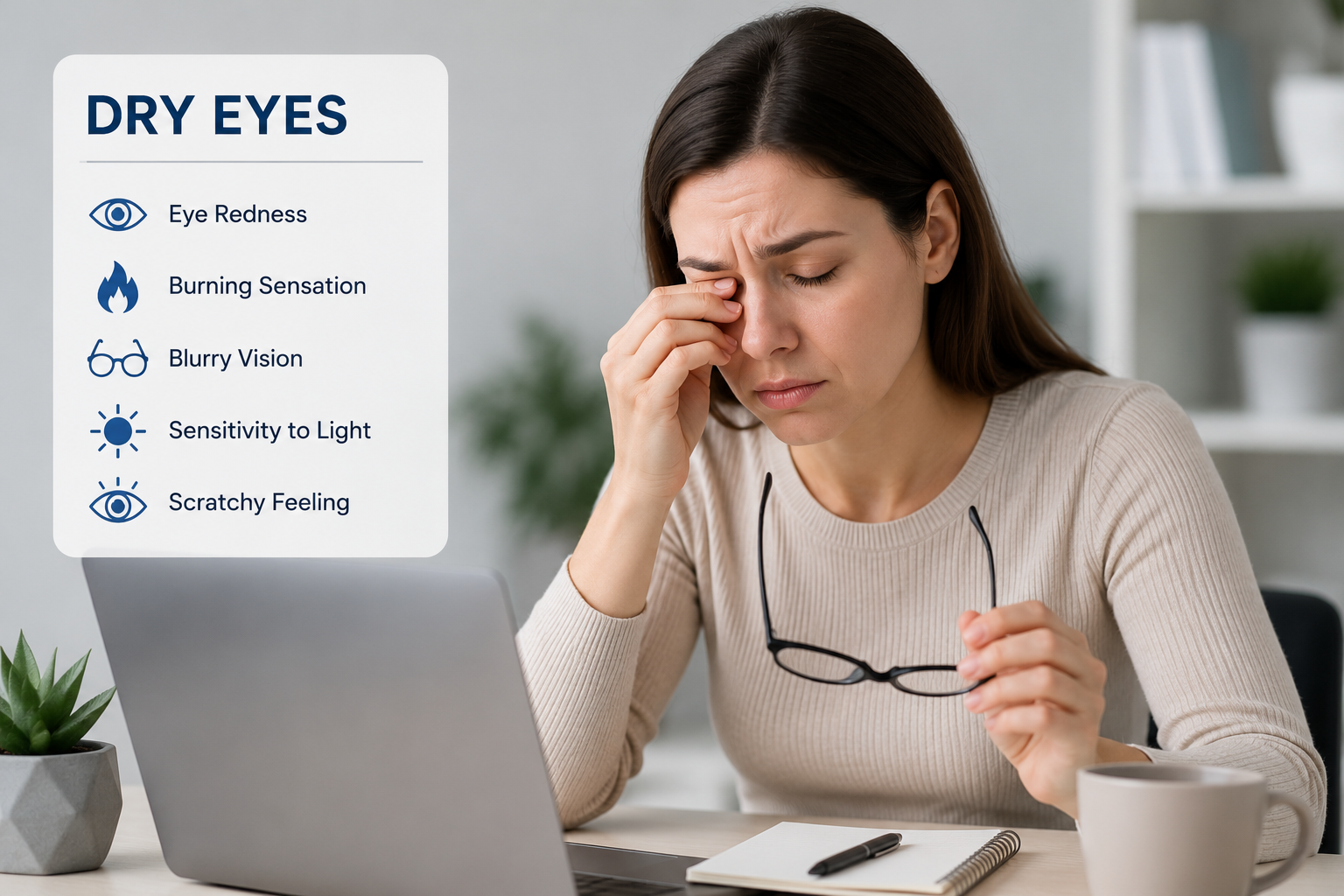
Dry Eyes
Dry eyes occur when the eyes cannot produce enough tears to keep the surface properly moisturized. This condition is more common in older adults, women, and contact lens users. Symptoms may include eye redness, burning, blurry vision, sensitivity to light, and a scratchy feeling inside the eyes. Long screen time and dry environments can also make dry eyes worse.
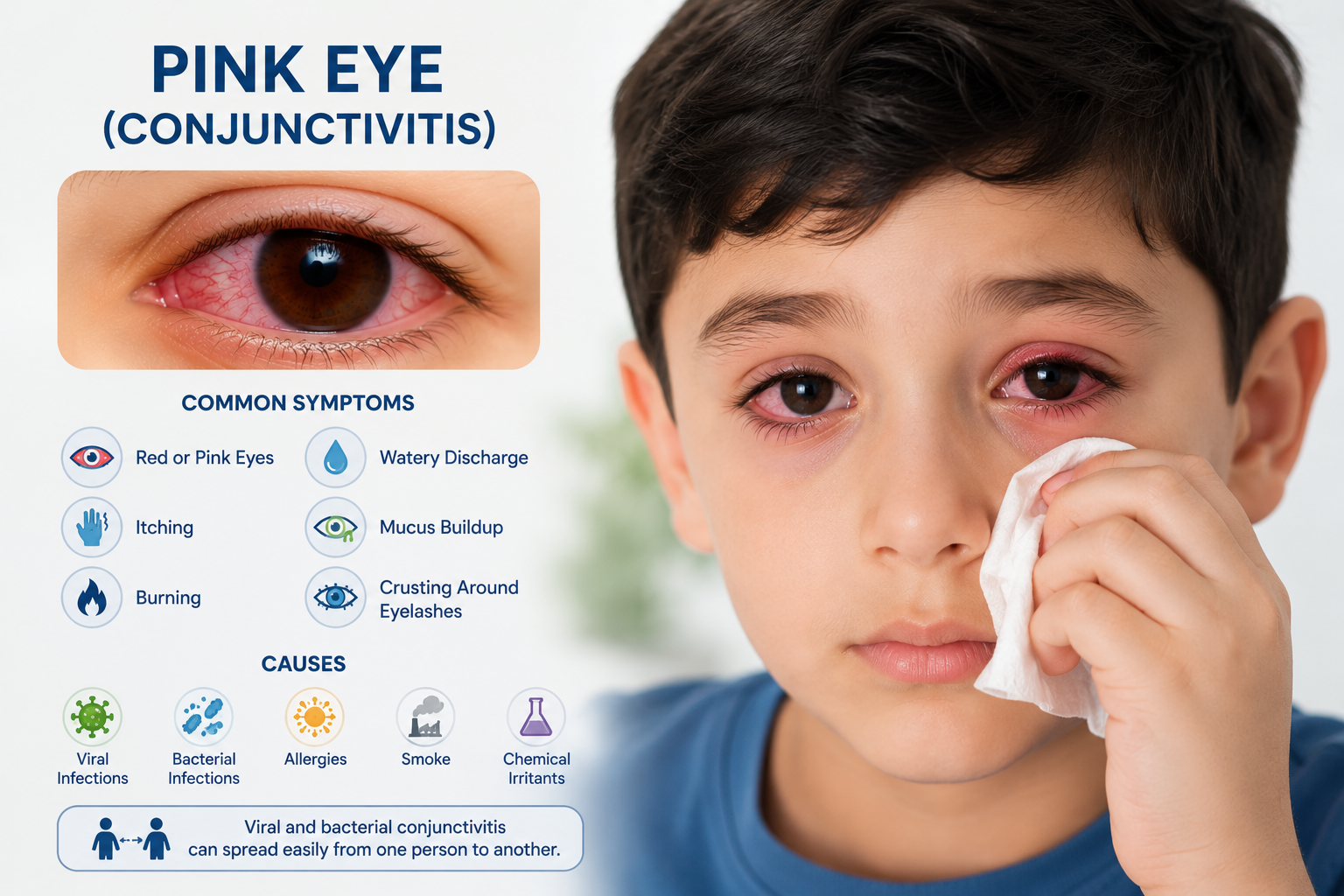
Pink Eye (Conjunctivitis)
Conjunctivitis, also known as pink eye, is inflammation of the conjunctiva, the thin membrane covering the white part of the eye and inner eyelids. This condition can cause red or pink eyes, itching, burning, watery discharge, mucus buildup, and crusting around the eyelashes. Pink eye may develop because of viral infections, bacterial infections, allergies, smoke, or chemical irritants. Viral and bacterial conjunctivitis can spread easily from one person to another.
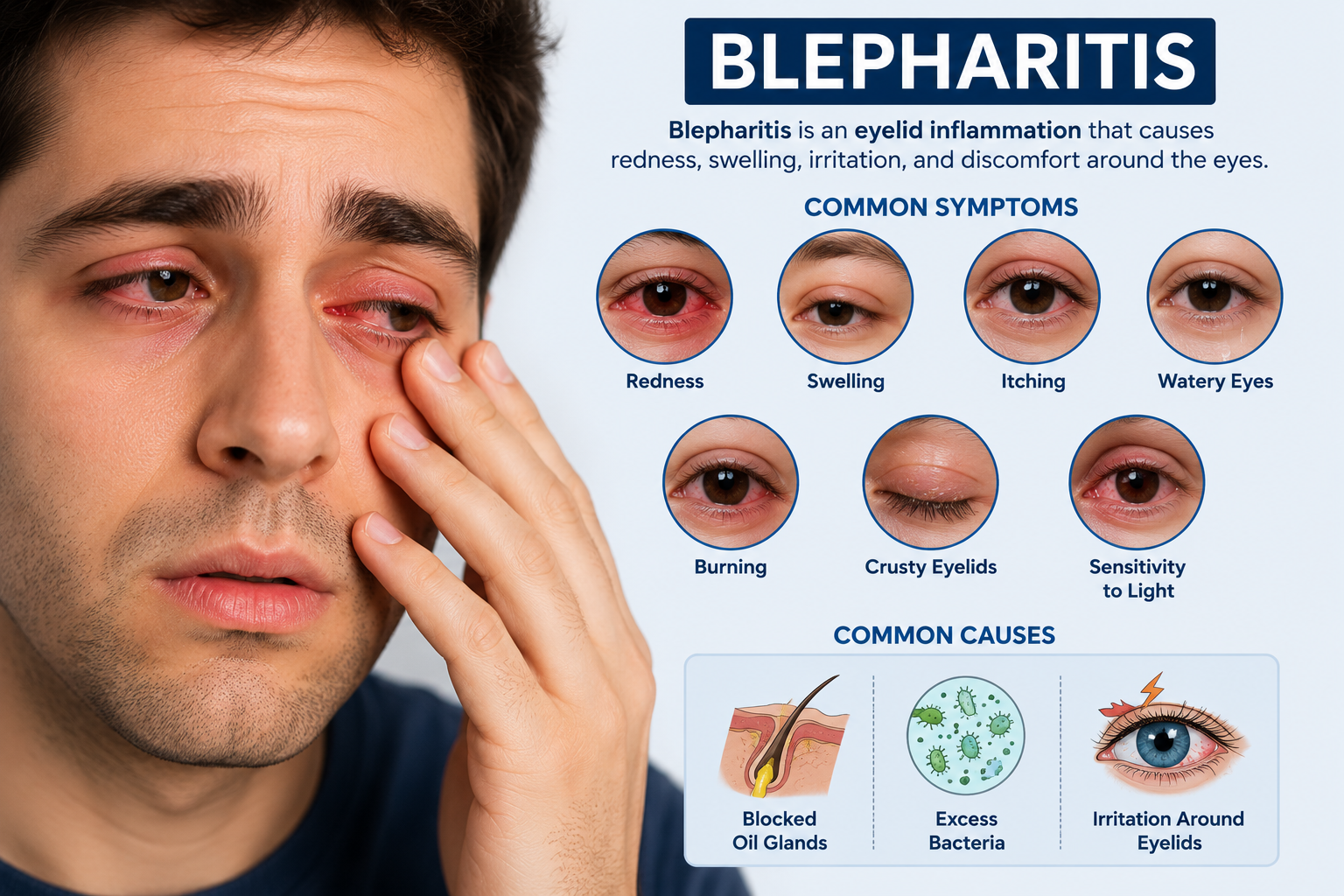
Blepharitis
Blepharitis is an eyelid inflammation that causes redness, swelling, irritation, and discomfort around the eyes. People with blepharitis may experience watery eyes, itching, burning, crusty eyelids, and sensitivity to light. In severe cases, it may also affect eyelashes and vision. This condition often develops due to blocked oil glands, excess bacteria, or irritation around the eyelids.
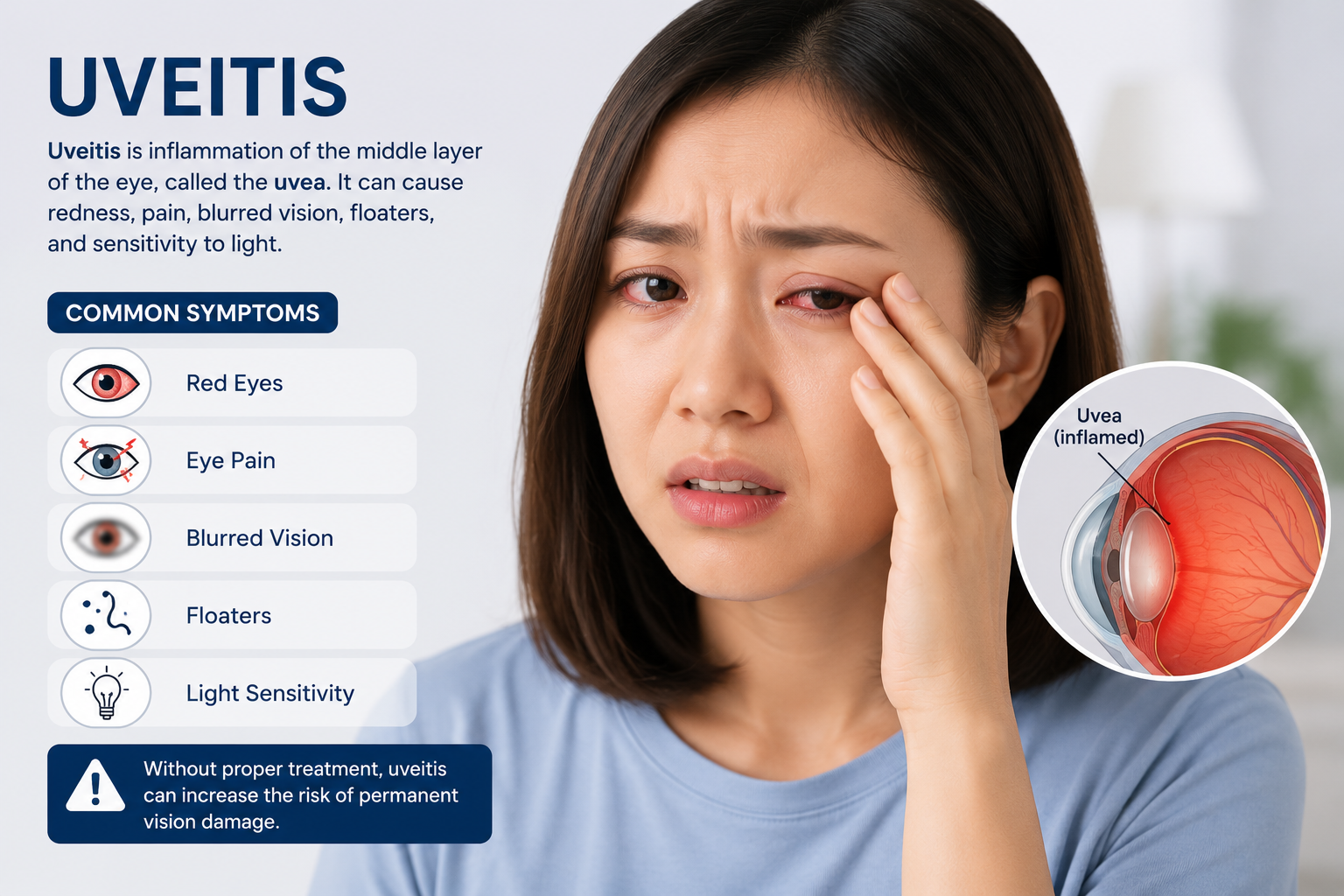
Uveitis
Uveitis is inflammation of the middle layer of the eye, called the uvea. It can lead to red eyes, eye pain, blurred vision, floaters, and light sensitivity. Uveitis may be associated with autoimmune diseases, infections, certain cancers, or viral conditions like herpes simplex virus. Without proper treatment, uveitis can increase the risk of permanent vision damage.
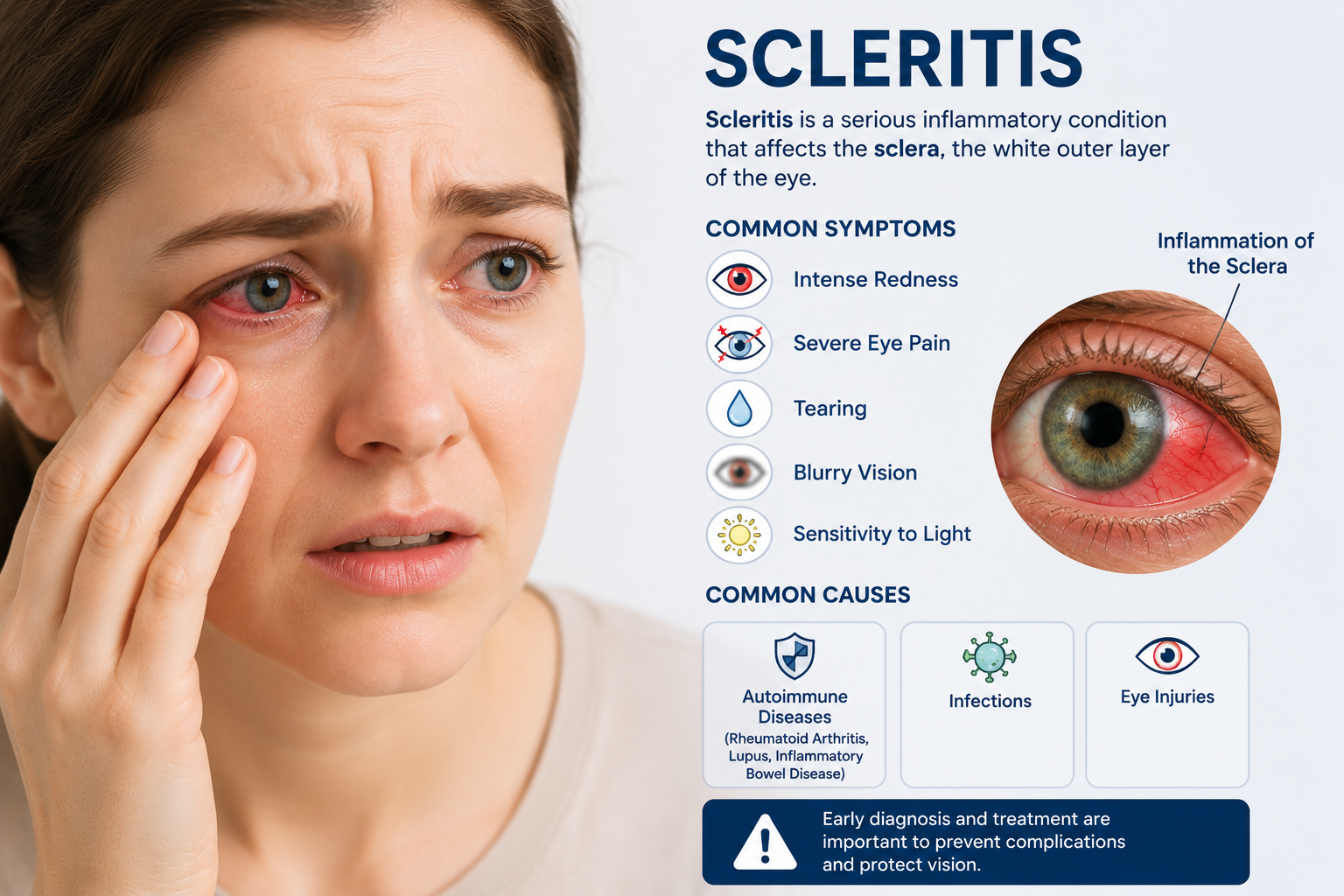
Scleritis
Scleritis is a serious inflammatory condition that affects the sclera, the white outer layer of the eye. It may cause intense redness, severe eye pain, tearing, blurry vision, and sensitivity to light. Scleritis is often linked to autoimmune diseases such as rheumatoid arthritis, lupus, or inflammatory bowel disease, but eye injuries and infections can also trigger it.
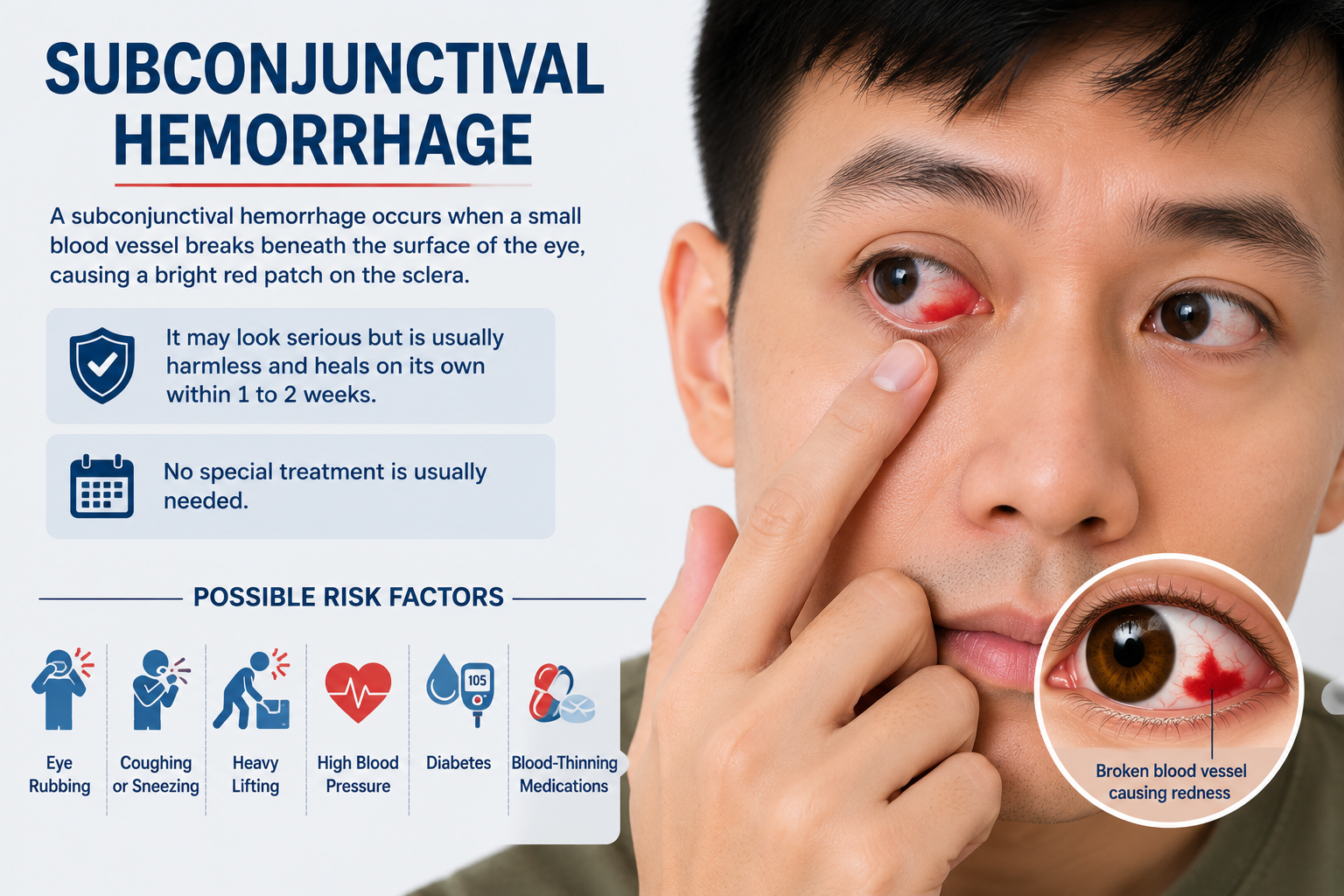
Subconjunctival Hemorrhage
A subconjunctival hemorrhage happens when a small blood vessel breaks beneath the surface of the eye, creating a bright red patch on the sclera. Although it may appear alarming, this condition is usually harmless and often heals naturally within one or two weeks. Eye rubbing, coughing, sneezing, vomiting, heavy lifting, high blood pressure, diabetes, and blood-thinning medications may increase the chances of developing this condition.
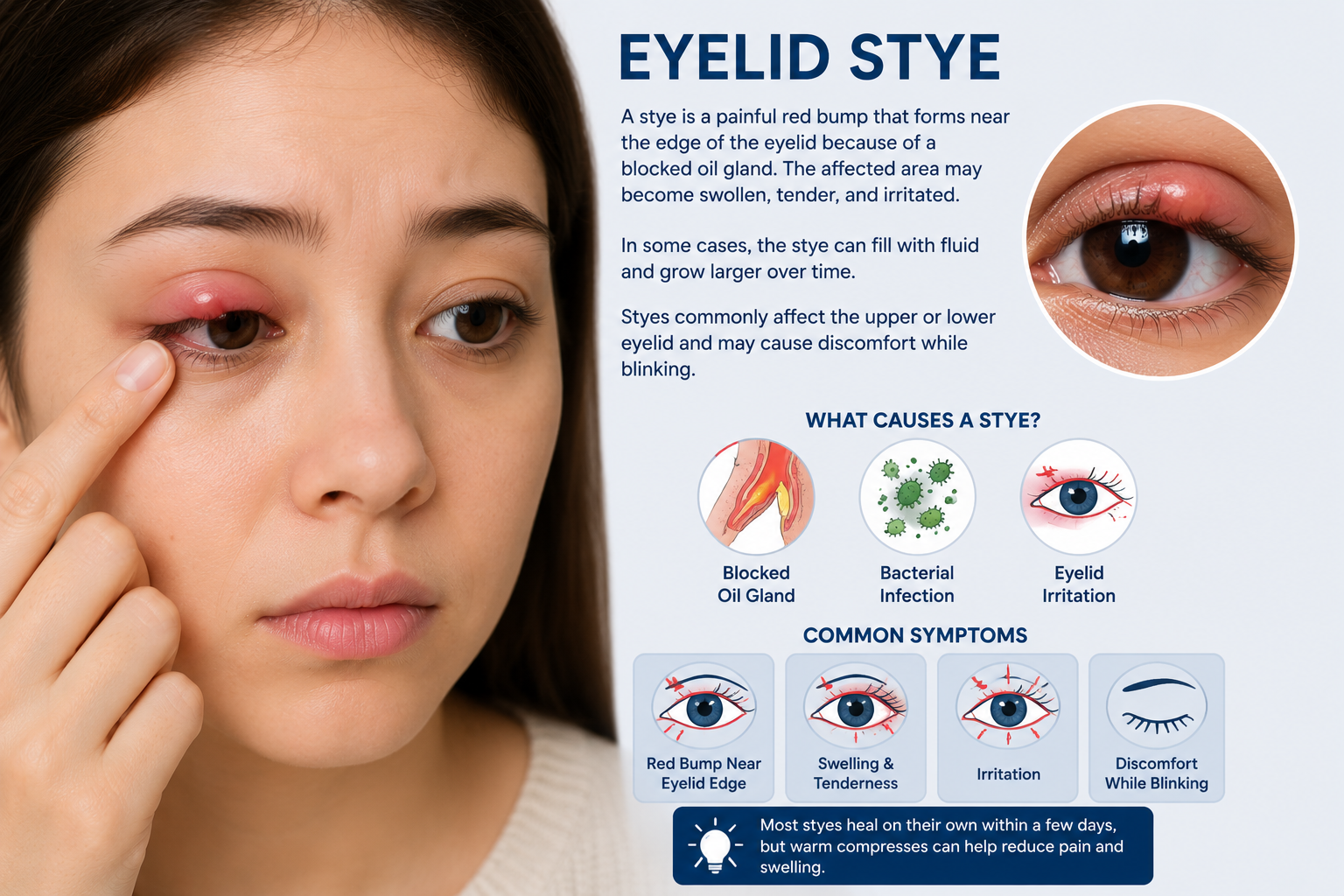
Eyelid Stye
A stye is a painful red bump that forms near the edge of the eyelid because of a blocked oil gland. The affected area may become swollen, tender, and irritated. In some cases, the stye can fill with fluid and grow larger over time. Styes commonly affect the upper or lower eyelid and may cause discomfort while blinking.
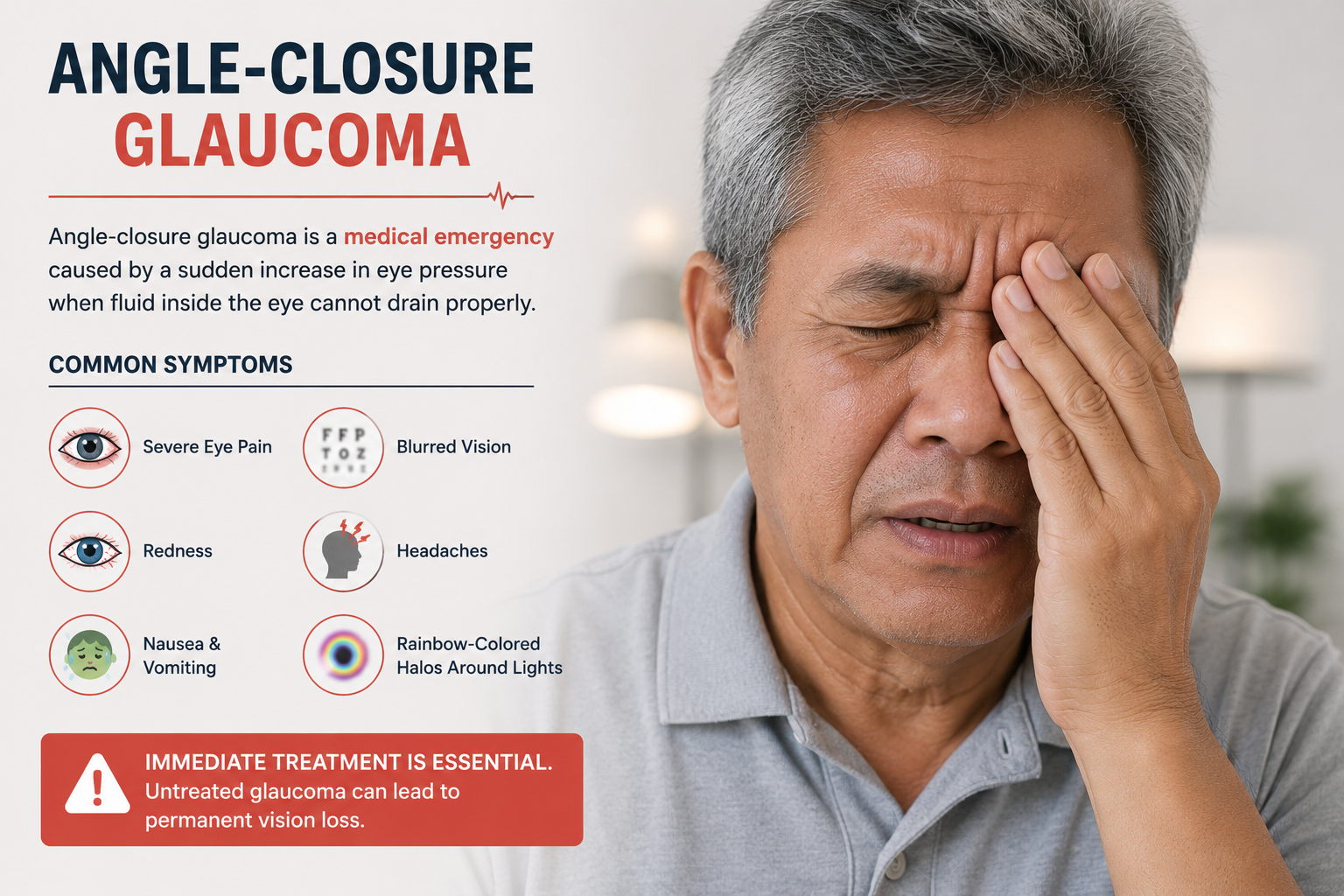
Angle-Closure Glaucoma
Angle-closure glaucoma is a medical emergency caused by a sudden increase in eye pressure when fluid inside the eye cannot drain properly. Symptoms often include severe eye pain, redness, blurred vision, headaches, nausea, vomiting, and rainbow-colored halos around lights. Immediate treatment is important because untreated glaucoma can lead to permanent vision loss.
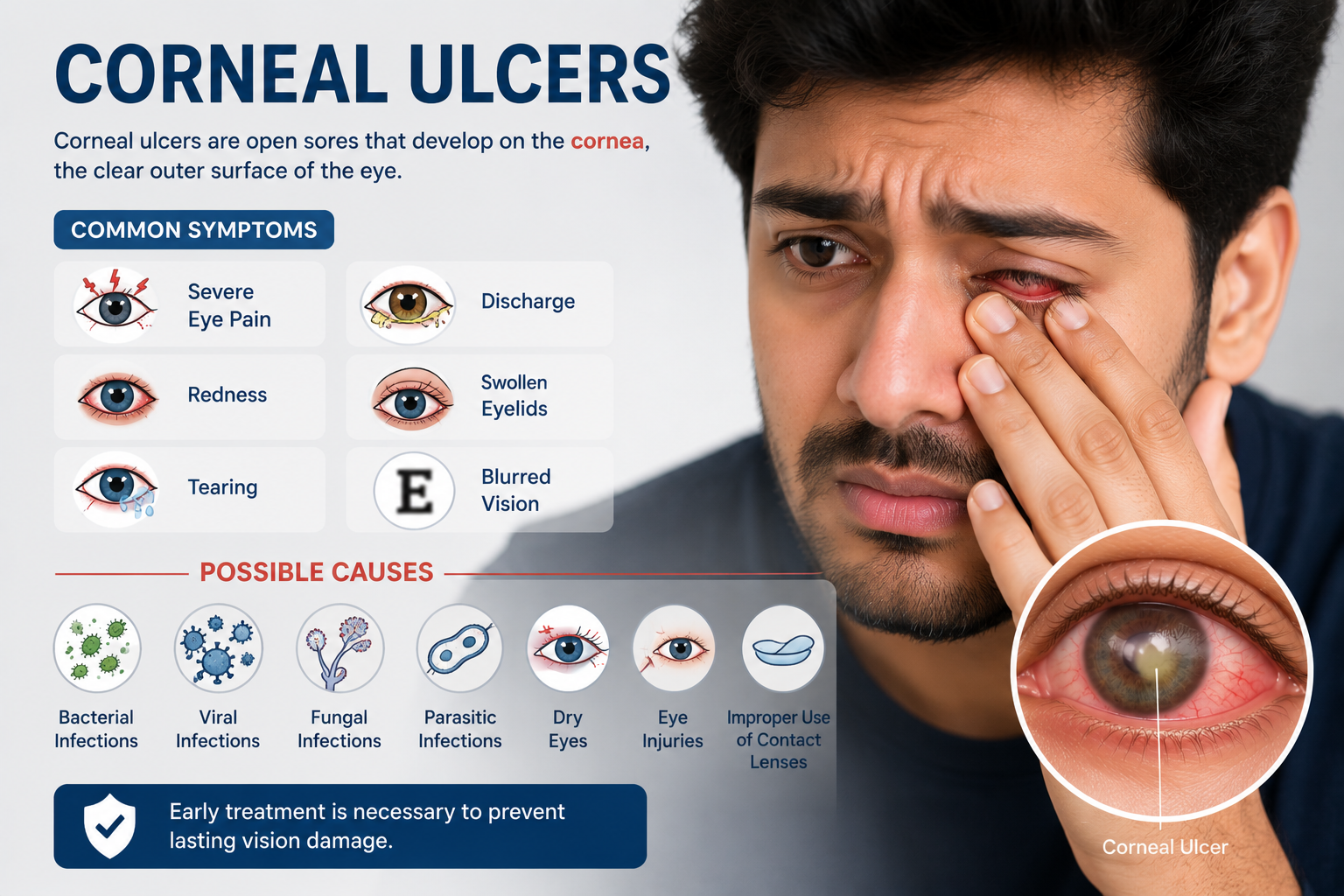
Corneal Ulcers
Corneal ulcers are open sores that develop on the cornea, the clear outer surface of the eye. This condition can cause severe eye pain, redness, discharge, tearing, swollen eyelids, blurred vision, and sensitivity to light. Corneal ulcers may occur because of bacterial, viral, fungal, or parasitic infections, dry eyes, eye injuries, or improper use of contact lenses. Early treatment is necessary to prevent lasting vision damage.
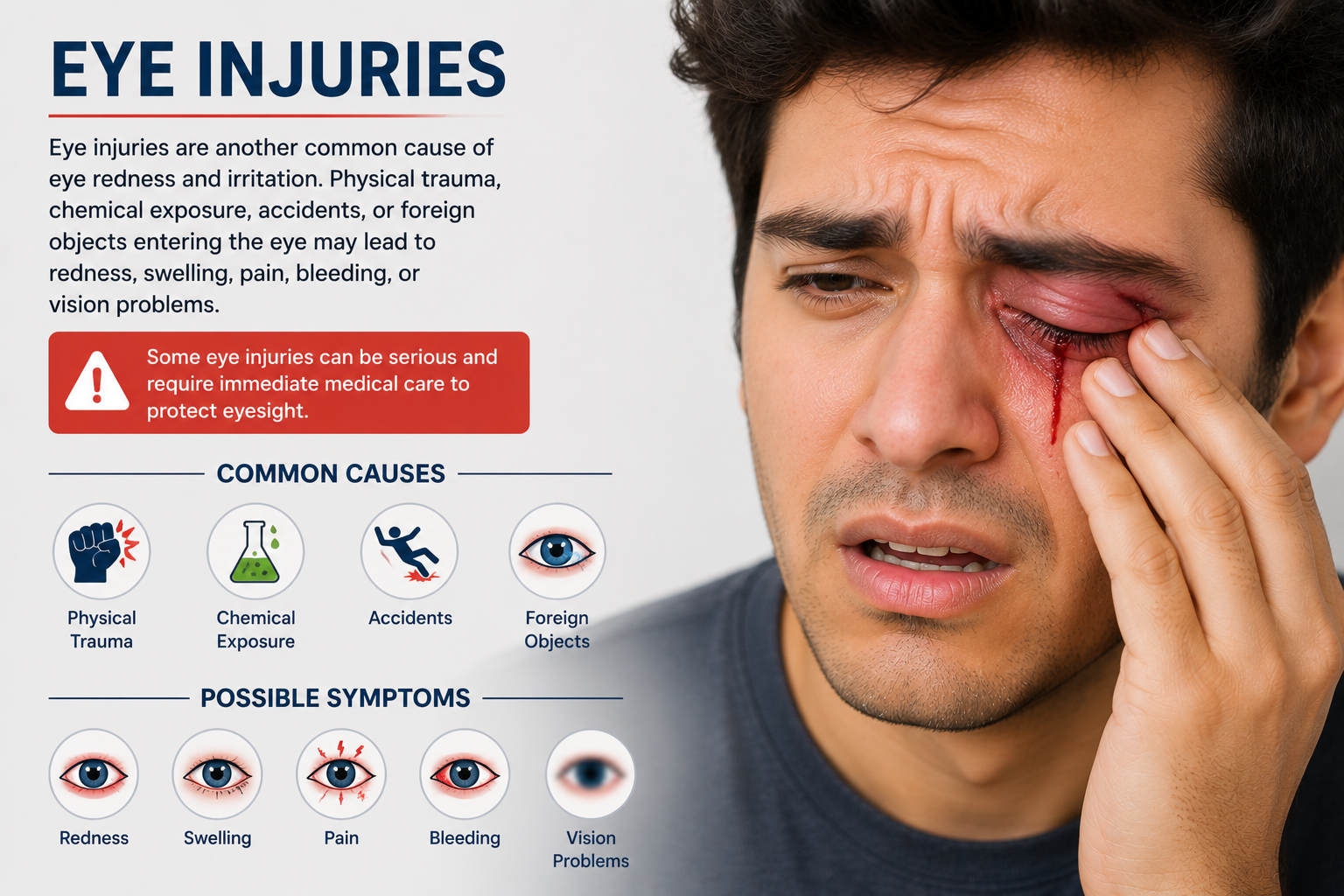
Eye Injuries
Eye injuries are another common cause of eye redness and irritation. Physical trauma, chemical exposure, accidents, or foreign objects entering the eye may lead to redness, swelling, pain, bleeding, or vision problems. Some eye injuries can be serious and require immediate medical care to protect eyesight.
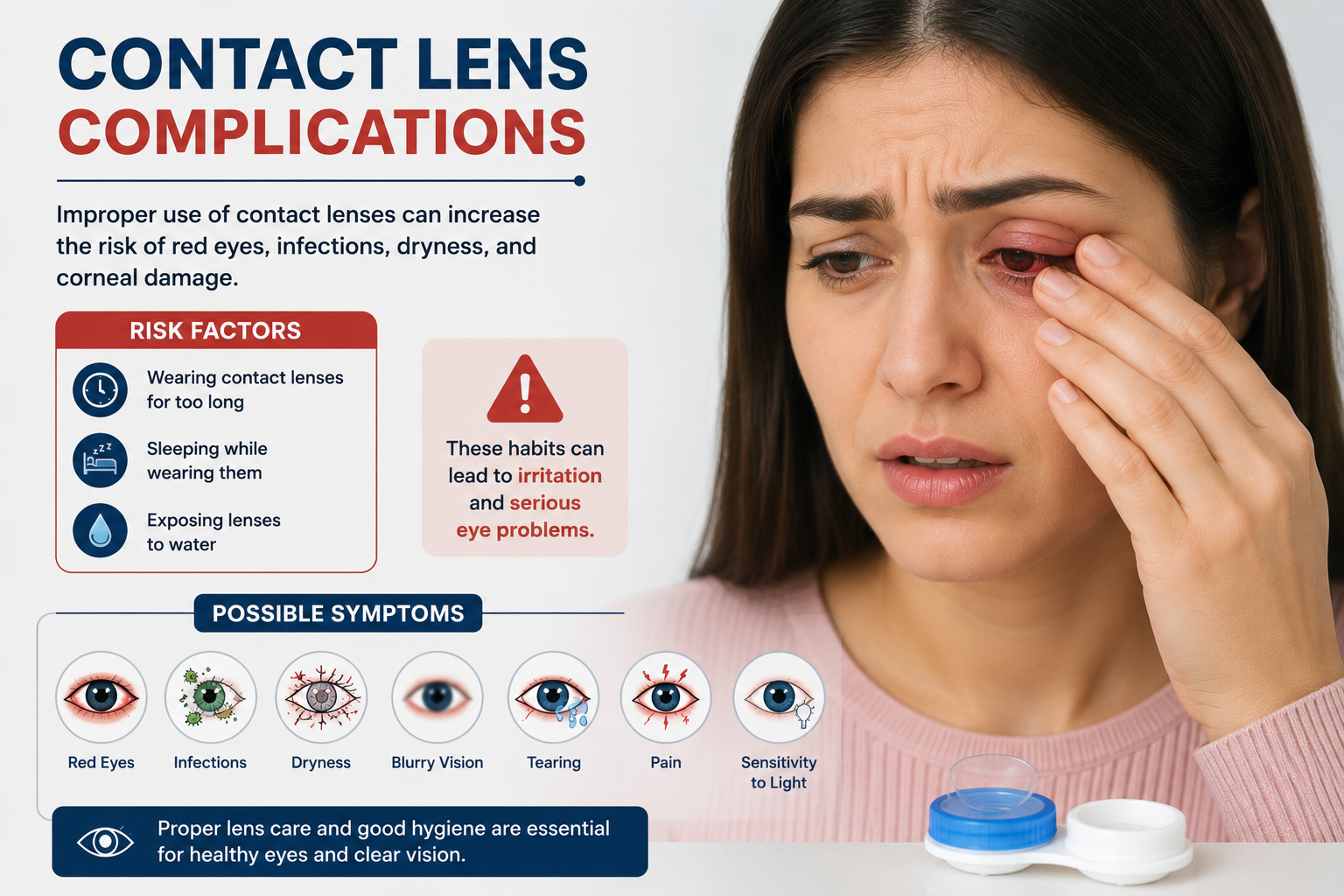
Contact Lens Complications
Improper use of contact lenses can increase the risk of red eyes, infections, dryness, and corneal damage. Wearing contact lenses for too long, sleeping while wearing them, or exposing them to water can lead to irritation and serious eye problems. Contact lens complications may also cause blurry vision, tearing, pain, and sensitivity to light.
Other Causes of Red Eyes
Other possible causes of eye redness include alcohol use, cannabis use, sun-related eye irritation, ocular rosacea, inward-growing eyelashes, eye infections, cellulitis around the eye, parasitic infections, and certain eye cancers. While some causes are mild and temporary, others may require professional medical treatment to protect eye health and vision.
Ways to Treat the Symptoms of Eye Redness
Mild eye redness caused by conditions like allergies, conjunctivitis, or blepharitis can often be treated at home with proper care and healthy eye habits. Early treatment may help reduce redness, irritation, swelling, dryness, and discomfort while supporting faster healing and better eye comfort.
Apply a Cold Compress
Using a cold compress on closed eyes several times a day may help calm irritation and reduce swelling and redness. It can also provide soothing relief for tired, dry, or inflamed eyes.
Use Over-the-Counter Medicines
Over-the-counter antihistamines and decongestants may help control allergy-related eye redness and irritation. Pain relievers such as ibuprofen or acetaminophen may also help ease discomfort and swelling.
Try Artificial Tears
Artificial tears can help moisturize dry eyes, reduce irritation, and remove dust or other irritants from the eyes. Chilled artificial tears may provide additional cooling relief and improve eye comfort.
Stay Away From Irritants
Avoiding triggers such as smoke, pollen, dust, and chemical fumes may help prevent eye redness from becoming worse. Limiting exposure to environmental irritants can help protect sensitive eyes during recovery.
Keep Your Hands Clean
Frequent hand washing may help prevent bacteria and dirt from spreading to the eyes. Avoid rubbing or touching your eyes if your hands are not clean, as this can increase irritation or infection risk.
Avoid Wearing Makeup or Contact Lenses
Eye makeup and contact lenses may worsen irritation and delay healing. It is best to stop using them until the redness and discomfort have completely improved.
Limit Digital Screen Use
Looking at screens for long periods can cause eye strain, dryness, and irritation. Reducing screen time and taking regular breaks may help relieve eye redness and improve overall eye health.
If your eye redness is linked with eye pain, blurred vision, or other vision changes, it is important to consult a doctor as soon as possible. The doctor may ask about your symptoms, medical history, current health conditions, and possible causes of eye irritation. They may also perform an eye examination to identify the exact cause of the redness and discomfort.
Based on the diagnosis, the doctor may recommend treatments to reduce symptoms and protect your eye health. These treatments may include:
- steroid eye drops or oral steroid medicines
- antimicrobial medications, including eye drops, tablets, or topical treatments
- prescription eye drops for conditions such as allergies, dry eyes, or glaucoma
- laser treatment for serious conditions like acute angle-closure glaucoma
When Should You See a Doctor
Eye redness is often caused by mild conditions and usually does not require emergency treatment. However, you should contact a doctor if the redness lasts longer than one week or becomes more severe over time. It is also important to seek medical advice if you experience symptoms such as blurred vision, eye pain, sensitivity to light, or unusual discharge from one or both eyes. Individuals taking blood-thinning medicines like heparin or warfarin should also consult a doctor if they develop ongoing eye redness.
While many cases of red eyes are harmless, certain symptoms may be signs of a serious eye problem that needs immediate medical attention. Emergency care may be necessary if eye redness occurs after an injury or accident, or if it is accompanied by severe headaches, blurry vision, or seeing halos around lights. Nausea and vomiting, along with red eyes, can also indicate a dangerous eye condition that may affect vision if not treated quickly.
How to Prevent Eye Redness
Most eye redness problems can be prevented by practicing proper eye care and avoiding things that may irritate the eyes or cause inflammation.
Follow these helpful tips to reduce the risk of eye redness:
- Wash your hands often, especially if you have been around someone with an eye infection.
- Always remove eye makeup completely before sleeping.
- Do not wear contact lenses for longer than the recommended duration.
- Avoid sleeping or swimming while wearing contact lenses.
- Clean and sanitize your contact lenses regularly to prevent infections.
- Limit activities that can strain your eyes, including excessive screen time.
- Protect your eyes from smoke, dust, chemicals, and other environmental irritants.
- If any harmful substance gets into your eyes, rinse them immediately with clean water or an eyewash solution.
Frequently Asked Questions(FAQs)
1. What is the primary cause of eye redness?
Eye redness happens when the tiny blood vessels on the surface of the eye become swollen or inflamed. It is usually caused by irritation, allergies, dryness, infections, or an eye injury. Redness may affect one or both eyes and can appear suddenly or develop gradually over time.
2. What Helps Clear Red Eyes Quickly?
To reduce red eyes quickly, use artificial tears to keep the eyes moisturized, apply a cold compress on closed eyes for a few minutes, and avoid irritants such as smoke, dust, or allergens. Eye drops designed for redness relief may also help reduce visible redness. Getting enough rest, staying hydrated, and removing contact lenses can also improve eye comfort and reduce irritation.
3. Which Illness Can Cause Red Eyes?
Viral conjunctivitis is an eye infection caused by viruses and is commonly known as pink eye. It often causes red eyes, watery discharge, sore throat, and a runny nose, similar to common cold symptoms. This condition usually lasts for 1 to 2 weeks and can spread easily from one person to another.
Conclusion:
Eye redness is a common eye problem that can develop due to allergies, infections, dry eyes, eye strain, irritation, or improper contact lens use. In many cases, red eyes are mild and improve with proper rest, good hygiene, artificial tears, and avoiding irritants like smoke, dust, and excessive screen time. However, persistent redness along with symptoms such as eye pain, blurred vision, swelling, or light sensitivity may indicate a more serious eye condition that requires medical attention. Understanding the causes, symptoms, treatment options, and prevention tips for eye redness can help protect your eye health and reduce the risk of long-term complications.
Read more information:
Eye Redness Causes and Treatment
Fatigue Symptoms, Causes, Types, and Treatment
How to Lose Weight at Home Naturally

Welcome to Health Line Tips! I’m Mazhar Hayyat, an AI-Powered SEO, and Content Writer with 4 years of experience. I help websites rank higher, get more traffic, and look amazing. My goal is to make SEO and web design simple and effective for everyone. Let’s achieve more together!