In today’s fast-paced world, alcohol has become a common part of social gatherings and stress relief. However, regular or excessive alcohol consumption can quietly harm your physical and mental health. The good news is that limiting or quitting alcohol is one of the most powerful lifestyle changes you can make to dramatically improve your overall well-being.
Whether you want to drink less or quit completely, even small reductions can deliver impressive results within weeks. This comprehensive guide covers everything you need to know.
Understanding Harmful Alcohol Consumption
Harmful alcohol consumption goes beyond occasional drinking. It includes:
- Binge drinking (4+ drinks for women, 5+ for men in one sitting)
- Drinking almost every day
- Consuming alcohol to cope with stress, anxiety, or emotions
- Any level that affects sleep, mood, work, or relationships
According to health experts, even moderate drinking can become risky over time. Reducing alcohol intake helps your body repair and function at its optimal level.
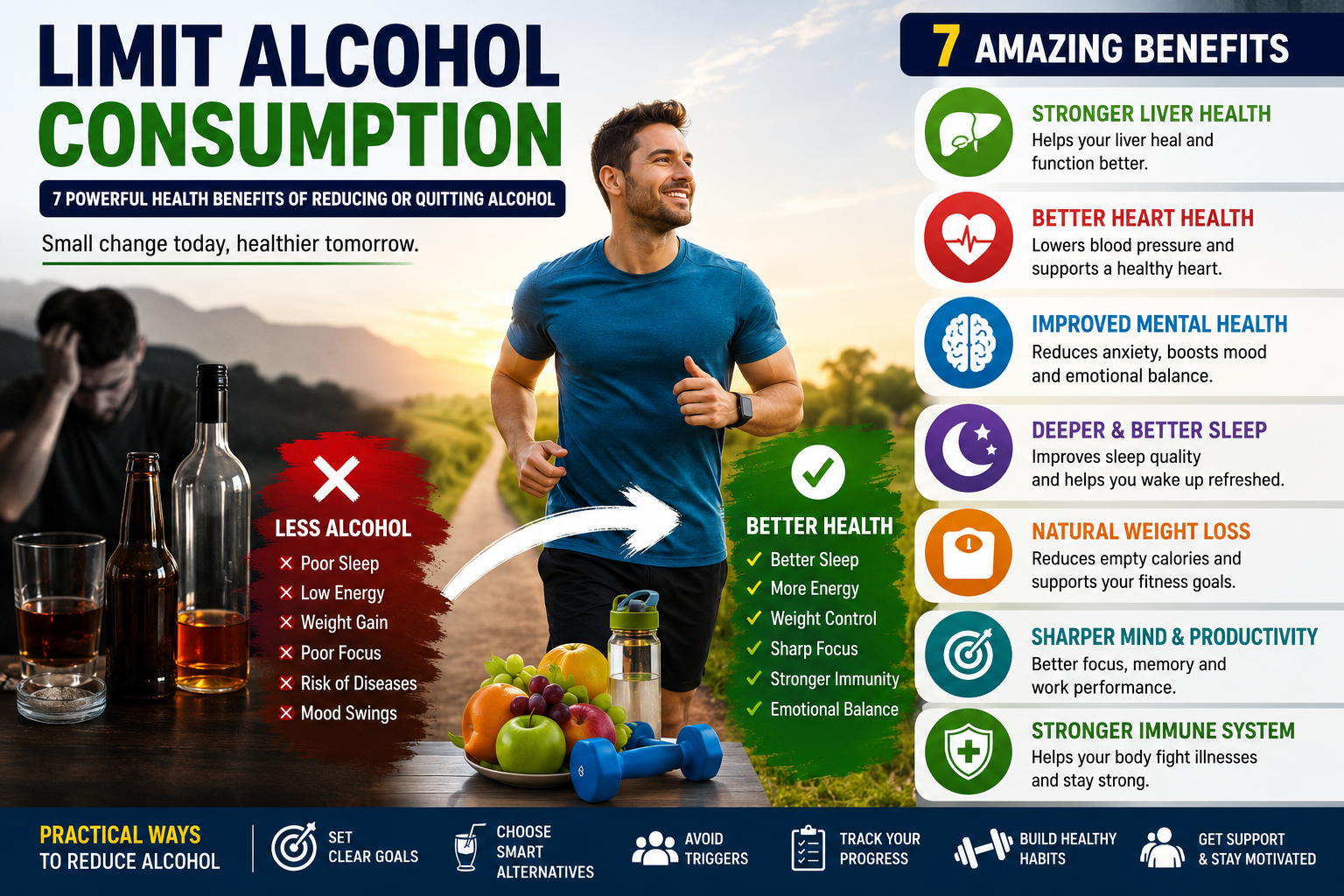
10 Proven Health Benefits of Limiting Alcohol Consumption
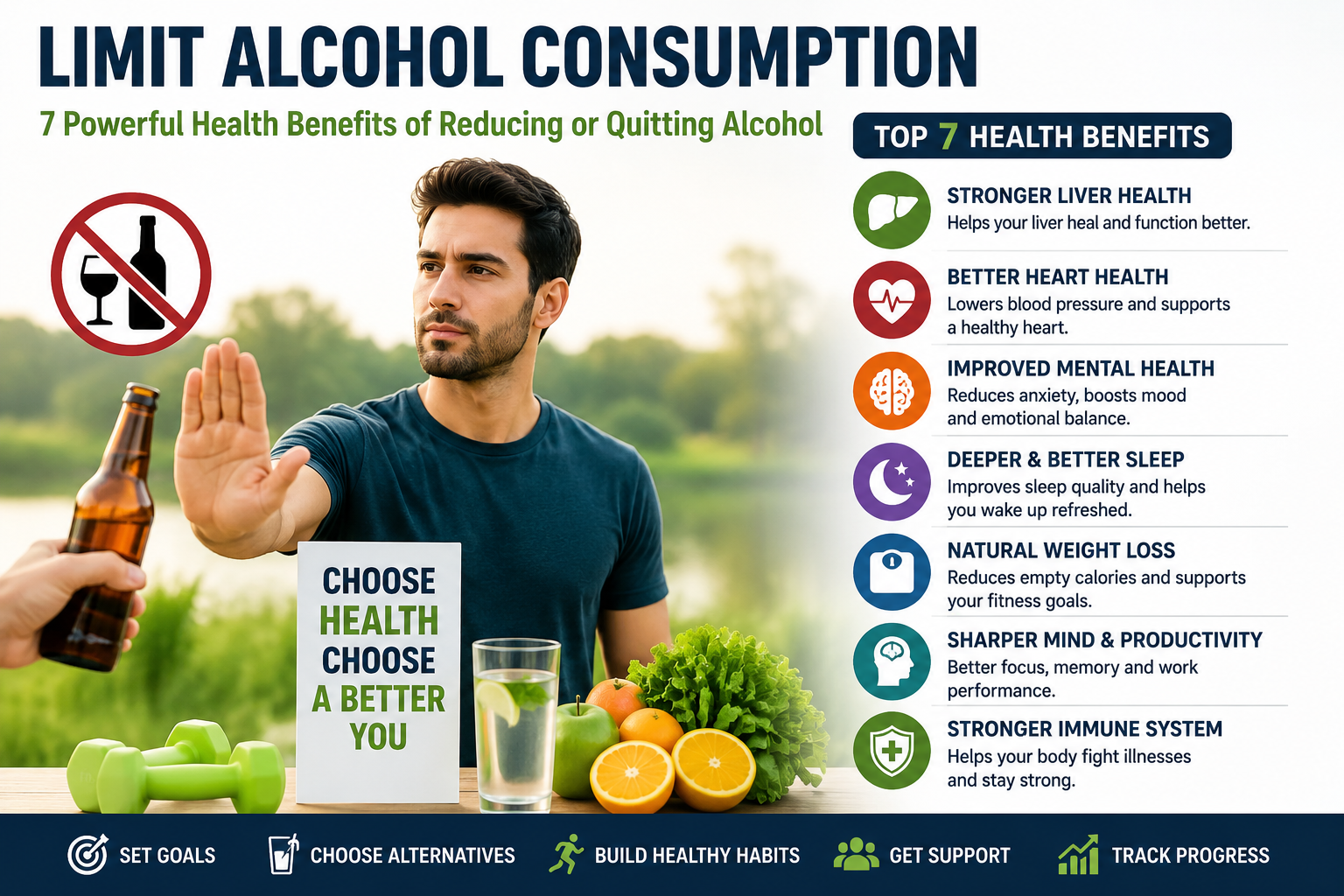
- Liver Recovery and Protection The liver processes every drop of alcohol you drink. Excessive drinking leads to fatty liver, inflammation, and scarring. When you limit alcohol, the liver begins healing naturally, reducing the risk of serious liver diseases.
- Improved Heart Health and Blood Pressure Heavy drinking raises blood pressure and triglycerides. Cutting back helps lower blood pressure, reduces strain on the heart, and decreases the risk of cardiovascular diseases.
- Better Mental Health and Emotional Stability Alcohol is a depressant. While it may offer temporary relief, it often worsens anxiety, depression, and mood swings. Reducing alcohol leads to more stable moods, less brain fog, and improved mental clarity.
- Deeper, More Restorative Sleep Alcohol fragments your sleep cycle and reduces REM sleep. People who limit alcohol consistently report falling asleep faster, staying asleep longer, and waking up refreshed.
- Natural Weight Loss and Improved Metabolism Alcoholic drinks contain hundreds of empty calories with zero nutrition. Limiting alcohol eliminates these hidden calories, reduces cravings, and makes weight management much easier.
- Stronger Immune System Excessive alcohol weakens your body’s natural defense system. Drinking less helps your immune system work more efficiently, reducing frequency of colds and infections.
- Sharper Brain Function and Productivity Alcohol affects memory, focus, and decision-making. Many people notice better concentration, faster thinking, and higher productivity after reducing alcohol intake.
- Healthier Skin and Slower Aging Alcohol dehydrates the skin and increases inflammation. Cutting down often results in clearer, brighter skin and a more youthful appearance.
- Stronger Relationships and Social Life Less alcohol means more meaningful conversations, better emotional availability, and fewer regrets. Many experience improved relationships with family and friends.
- Better Financial Health Cutting alcohol expenses can save thousands of rupees every year — money that can be invested in health, travel, or personal growth.
Practical Step-by-Step Guide to Reduce Alcohol Consumption
- Step 1: Set Clear & Realistic Goals Decide whether you want to cut down (e.g., 2 drinks per week) or quit completely. Write down your “why”.
- Step 2: Replace Alcohol with Better Alternatives Try sparkling water with lime, virgin mojitos, kombucha, herbal teas, or fresh fruit mocktails.
- Step 3: Redesign Your Social Habits Plan alcohol-free activities like gym sessions, hiking, movie nights, or coffee meetups.
- Step 4: Track Your Progress Use a journal or habit-tracking app for 30 days to stay accountable.
- Step 5: Build Replacement Habits Replace evening drinks with exercise, meditation, reading, or a new hobby.
- Step 6: Seek Support When Needed Talk to supportive friends or family. For serious dependency, consult a doctor or counselor.
Long-Term Impact of Reducing Alcohol Intake
People who successfully limit alcohol consumption often report:
- Sustained high energy levels
- Better emotional resilience
- Improved self-confidence
- Reduced risk of chronic diseases
- Greater overall life satisfaction
The best part? These benefits keep growing the longer you maintain the change.
Common Challenges & How to Overcome Them
- Social Pressure → Prepare polite ways to say “I’m not drinking tonight.”
- Cravings → Stay hydrated, eat well, and distract yourself with movement.
- Boredom → Build a rich alcohol-free lifestyle with new interests.
Frequently Asked Questions (FAQs)
Q1. Is moderate drinking safe? Moderate drinking may be acceptable for some healthy adults, but many health organizations now recommend minimizing alcohol as much as possible for optimal health.
Q2. How long does it take to see benefits? Most people notice better sleep and energy within 1–2 weeks. Deeper benefits like weight loss and mental clarity appear within 4–8 weeks.
Q3. Can I drink occasionally after quitting? It depends on your personal goals. Many people find that occasional mindful drinking works, while others prefer complete abstinence.
Conclusion
Limiting alcohol consumption is a simple yet transformative decision that benefits every area of your life from physical health and mental sharpness to relationships and finances.
You don’t need to make drastic changes overnight. Start with small, consistent steps. Your future self — with more energy, better health, and greater clarity — will be deeply grateful.
Ready to take the first step? Choose just one tip from this article and implement it this week. Share your goal in the comments below — we’d love to support your journey!