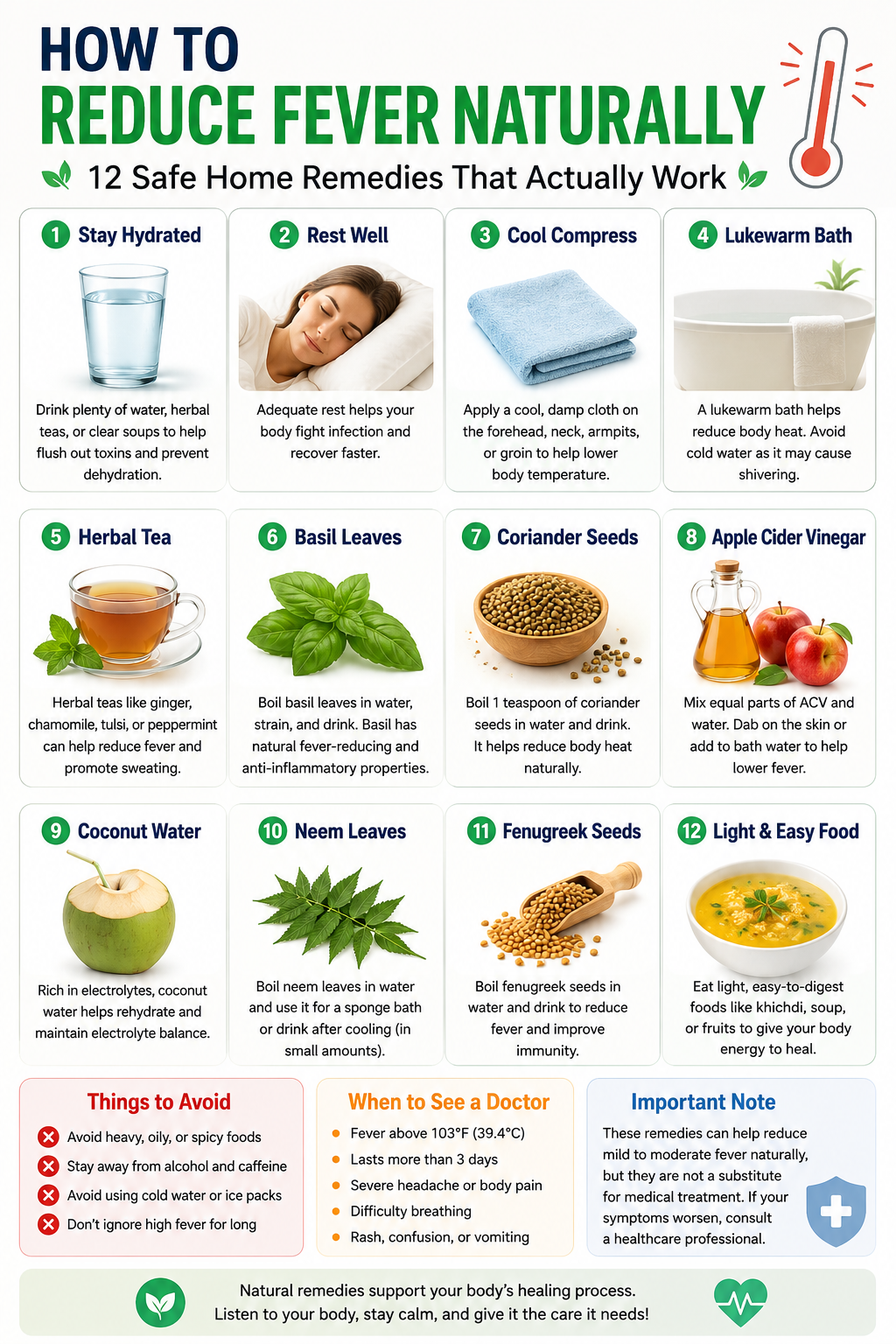
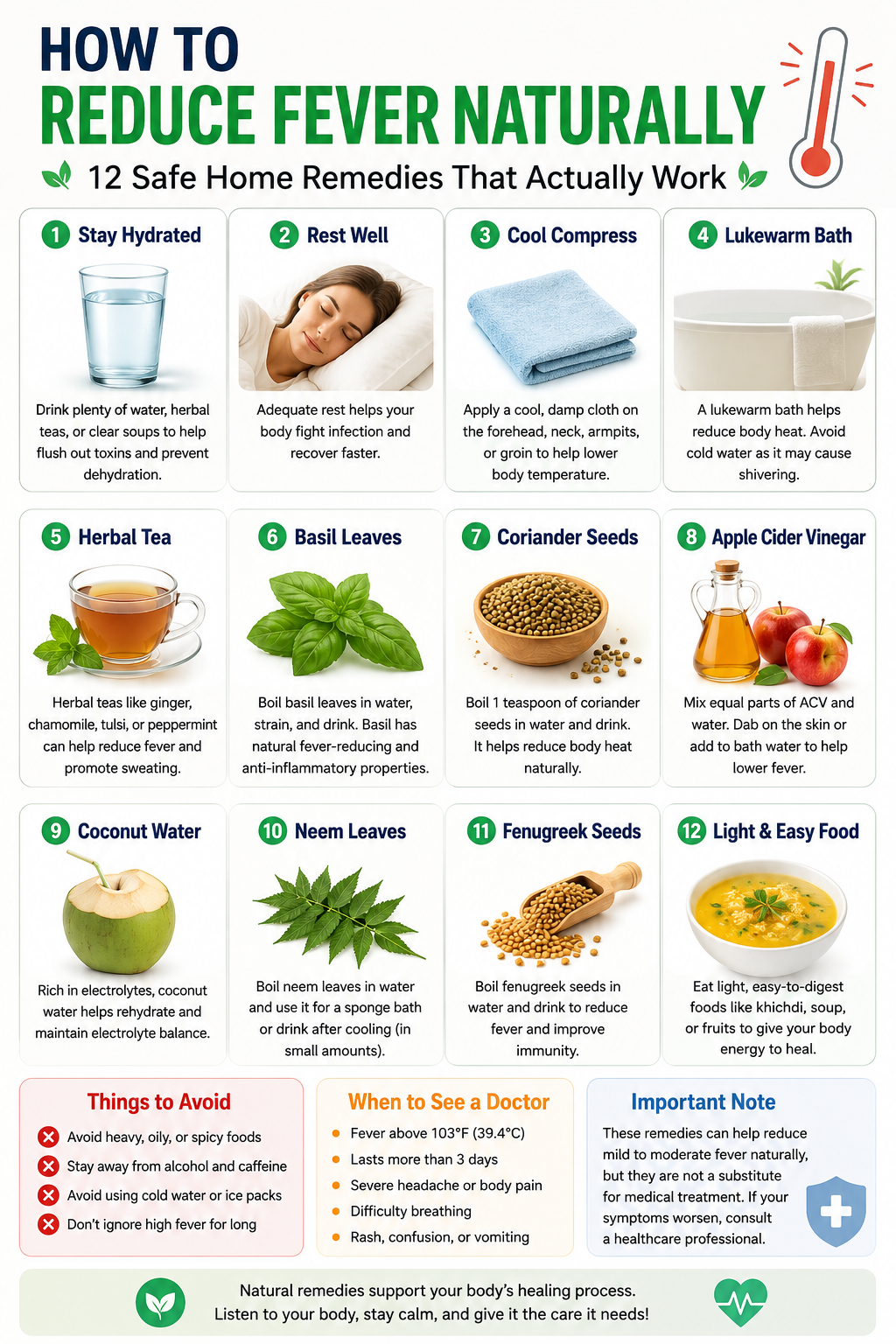
A fever is your body’s natural defense mechanism — a sign that your immune system is actively fighting off infection. While a mild fever (under 102°F/38.9°C) is usually nothing to panic about, the discomfort it brings can make you want fast relief. The good news? You don’t always need medication to bring your temperature down. Below are natural, science-backed ways to reduce fever safely at home.
What Causes Fever?
Fever happens when your hypothalamus (your body’s internal thermostat) raises your core temperature to fight off viruses, bacteria, or inflammation. Common triggers include the flu, common cold, infections, vaccinations, or even teething in babies.
Related- Fever Symptoms, Types, Causes and Treatment
1. Stay Hydrated
Fever increases fluid loss through sweating, making dehydration a real risk. Drink plenty of water, herbal teas, or clear broths. Coconut water and electrolyte drinks help replenish lost minerals faster than plain water alone.
2. Use a Lukewarm Sponge Bath
Wipe your body with a cloth soaked in lukewarm (not cold) water, focusing on the forehead, neck, armpits, and feet. Cold water can cause shivering, which actually raises body temperature — so always stick to lukewarm.
3. Dress Light and Keep the Room Cool
Wearing heavy clothing or piling on blankets traps heat. Opt for breathable, lightweight clothing and keep your room well-ventilated at a comfortable temperature.
4. Rest Is Non-Negotiable
Your immune system needs energy to fight infection. Avoid physical exertion and prioritize sleep — this is one of the fastest ways to recover.
5. Try Herbal Teas
- Ginger tea – has natural anti-inflammatory properties
- Tulsi (holy basil) tea – traditionally used to reduce fever in Ayurveda
- Peppermint tea – has a cooling effect and may ease discomfort
6. Apply a Cool Compress
Place a damp washcloth on the forehead or back of the neck. This helps cool blood flowing near the skin’s surface without shocking the body.
7. Eat Light, Nutrient-Dense Foods
Skip heavy or oily meals. Choose soups, fruits (especially water-rich ones like watermelon and oranges), and easily digestible foods to support recovery without taxing digestion.
8. Apple Cider Vinegar Soak (Use with Caution)
Some people add a small amount of diluted apple cider vinegar to bathwater, believing its mineral content helps draw out heat through the skin. Evidence is largely anecdotal, so use lukewarm water and avoid direct skin contact with undiluted vinegar.
9. Stay in a Well-Ventilated, Humid Room
Dry air can worsen throat irritation and discomfort during fever. A humidifier or a bowl of water in the room can help maintain comfortable humidity levels.
10. Foot Soak in Lukewarm Water
Soaking feet in lukewarm water for 10–15 minutes may help regulate body temperature through reflex cooling — a remedy used in many traditional healing systems.
11. Avoid Alcohol-Based Rubs
While once popular, rubbing alcohol on the skin can be absorbed and cause toxicity, especially in children. Stick to water-based cooling methods instead.
12. Monitor Your Temperature Regularly
Track your fever every few hours. This helps you notice patterns and know when natural remedies are working — or when it’s time to seek medical help.
When to See a Doctor
Natural remedies are helpful for mild fevers, but seek medical attention if:
- Fever exceeds 103°F (39.4°C)
- It lasts more than 3 days
- You experience severe headache, stiff neck, rash, difficulty breathing, or confusion
- A baby under 3 months has any fever
- Seizures occur
Final Thoughts
Reducing fever naturally is about supporting your body’s healing process — not suppressing it aggressively. Hydration, rest, light cooling methods, and proper nutrition work together to help your body recover safely. Always listen to your body, and don’t hesitate to consult a healthcare provider if symptoms worsen.
Read More:
- Fever Symptoms, Types, Causes and Treatment
- What Kills a Sore Throat Fast? 11 Effective Remedies for
- How to Cure Throat Pain Immediately: 15 Fast, Natural Relief Methods
- The Health Effects of Smoking: Why Is Smoking Bad for You?

Welcome to Health Line Tips! I’m Mazhar Hayyat, an AI-Powered SEO, and Content Writer with 4 years of experience. I help websites rank higher, get more traffic, and look amazing. My goal is to make SEO and web design simple and effective for everyone. Let’s achieve more together!