
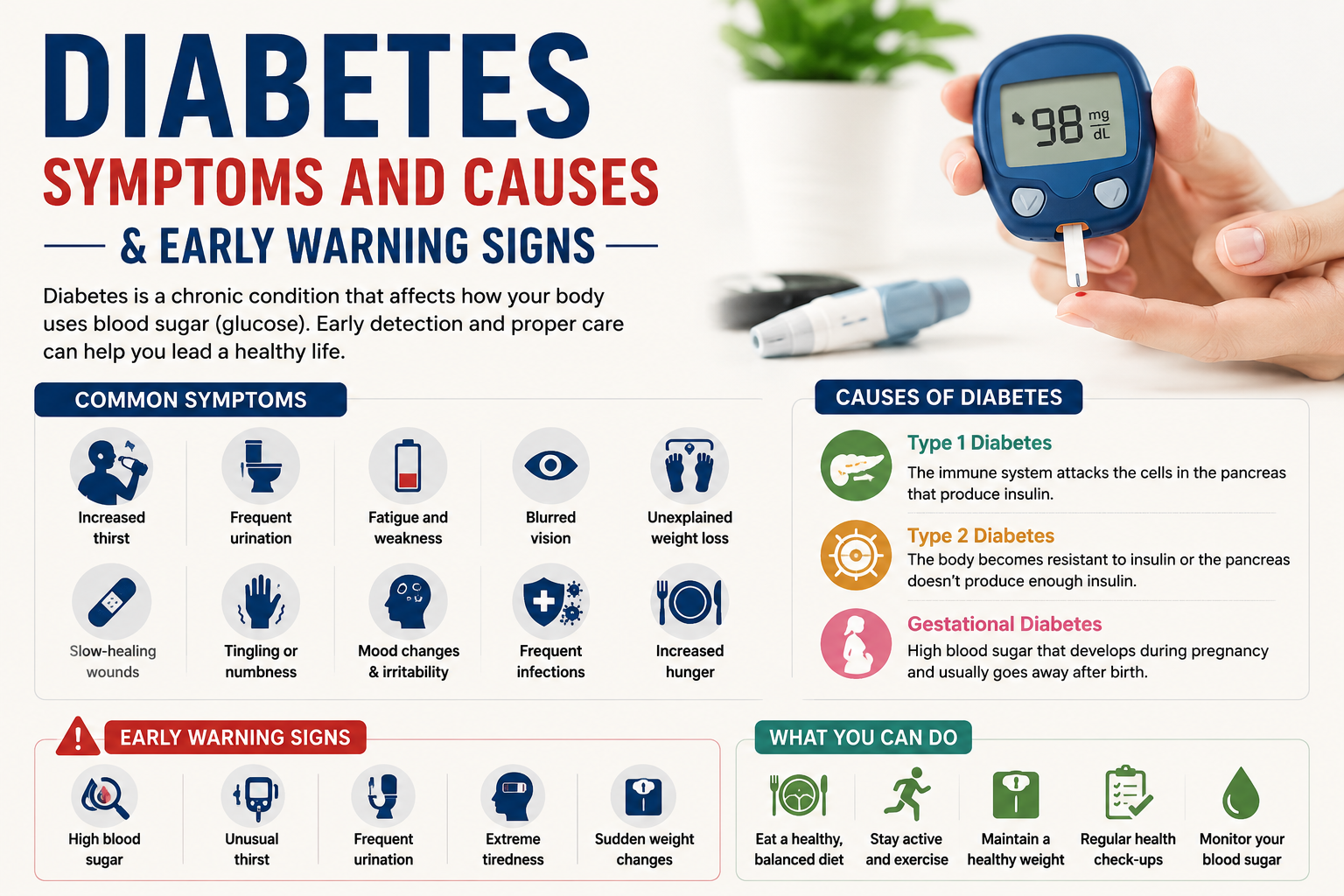
Diabetes is a common condition that affects how your body processes blood sugar (glucose). It can develop slowly, and many people may not notice the symptoms until the disease has already started impacting their health. That’s why understanding the early warning signs of diabetes is so important.
Common diabetes symptoms include excessive thirst, frequent urination, fatigue, blurred vision, increased hunger, and unexplained weight loss. While these symptoms may seem minor at first, they can signal high blood sugar levels and should not be ignored. Early diagnosis and treatment can help prevent serious complications.
In this guide, you’ll learn about the most common diabetes symptoms, causes, and risk factors. We’ll also explain how diabetes develops and share practical tips to help manage blood sugar levels and support long-term health.
Common Symptoms of Diabetes You Should Never Ignore
One of the biggest challenges with diabetes is that it doesn’t always cause obvious symptoms right away. Many people with prediabetes or type 2 diabetes may live with the condition for months or even years without realizing it. In contrast, type 1 diabetes often develops quickly, with symptoms that appear suddenly and become severe in a short period of time.
Because the early signs of diabetes can resemble everyday stress or fatigue, they are often overlooked. However, recognizing these warning signs early can help prevent serious health complications and lead to faster treatment.
Early Warning Signs of Diabetes
- Excessive thirst – Feeling thirsty all the time, even after drinking plenty of water.
- Frequent urination – Needing to urinate more often than usual, especially during the night.
- Unexplained weight loss – Losing weight without changes to your diet or exercise routine.
- Persistent fatigue – Feeling tired, weak, or lacking energy throughout the day.
- Blurred vision – Difficulty focusing or noticing changes in your eyesight.
- Slow-healing wounds – Cuts, scrapes, or sores that take longer than normal to heal.
- Frequent infections – Recurring skin, gum, urinary tract, or yeast infections.
- Mood changes and irritability – Sudden mood swings or feeling unusually irritable.
- Ketones in the urine – A sign that the body is breaking down fat for energy because it cannot use glucose properly.
If you notice one or more of these diabetes symptoms, it’s important to speak with a healthcare professional and have your blood sugar levels checked. Early diagnosis can help you manage diabetes effectively and reduce the risk of long-term complications.
Types of Diabetes: Understanding the Different Forms of the Disease
Diabetes is not a single condition. It is a group of diseases that affect how the body regulates blood sugar (glucose). While all types of diabetes involve problems with insulin, the causes and treatments can vary significantly. Understanding the different types of diabetes can help you recognize risk factors, symptoms, and the best ways to manage the condition.
What Causes Diabetes?
To understand the causes of diabetes, it’s important to first understand how your body controls blood sugar (glucose). Glucose is the body’s primary source of energy and is essential for the normal function of muscles, organs, and tissues. A hormone called insulin plays a key role in helping the body use glucose effectively.
How Insulin Regulates Blood Sugar
Insulin is produced by the pancreas, a gland located behind the stomach. After you eat, the pancreas releases insulin into the bloodstream. This hormone acts like a key, allowing glucose from the blood to enter the body’s cells, where it is used for energy. As glucose moves into the cells, blood sugar levels decrease, and the pancreas releases less insulin to maintain balance.
The Role of Glucose in the Body
Glucose comes from two main sources: the foods you eat and the liver. After digestion, glucose enters the bloodstream and is transported to cells with the help of insulin. The liver also stores extra glucose and releases it when blood sugar levels drop, such as between meals or during periods of fasting. This process helps keep blood sugar within a healthy range.
Why Diabetes Develops
Diabetes occurs when the body cannot properly regulate blood sugar levels. This may happen because the pancreas does not produce enough insulin, the body cannot use insulin effectively (insulin resistance), or both. As a result, glucose remains in the bloodstream instead of entering the cells, leading to high blood sugar levels.
The exact cause of diabetes is not fully understood. Researchers believe that a combination of genetic factors, family history, and environmental influences may contribute to the development of both type 1 and type 2 diabetes. While the causes vary, all forms of diabetes share one common problem: excess glucose building up in the blood, which can lead to serious health complications if left untreated.
Type 1 Diabetes
Type 1 diabetes is an autoimmune disease that occurs when the immune system mistakenly attacks and destroys the insulin-producing beta cells in the pancreas. As a result, the body can no longer make enough insulin to control blood sugar levels.
Without insulin, glucose cannot enter the body’s cells to provide energy, causing sugar to build up in the bloodstream. People with type 1 diabetes require lifelong insulin therapy through injections or an insulin pump to survive. Although it is often diagnosed in children, teenagers, and young adults, it can develop at any age.
Researchers have not yet found a way to prevent type 1 diabetes, and it is not caused by poor diet, lack of exercise, or lifestyle choices.
Type 2 Diabetes
Type 2 diabetes is the most common form of diabetes. It develops when the body’s cells become resistant to insulin, making it difficult for glucose to enter the cells efficiently. To compensate, the pancreas produces more insulin, but over time it may struggle to keep up with the body’s demands.
As insulin resistance increases, blood sugar levels begin to rise, eventually leading to type 2 diabetes. This condition is closely linked to factors such as excess body weight, physical inactivity, family history, and unhealthy eating habits.
Treatment for type 2 diabetes often includes a combination of lifestyle changes and medication. Key strategies for managing blood sugar levels include:
- Eating a healthy, balanced diet rich in nutrients
- Exercising regularly to improve insulin sensitivity
- Maintaining a healthy weight
- Monitoring blood sugar levels as recommended by a healthcare provider
- Taking prescribed medications when necessary
Unlike type 1 diabetes, many cases of type 2 diabetes can be prevented through healthy lifestyle choices. In some individuals, significant weight loss and long-term lifestyle improvements may even help achieve diabetes remission and better blood sugar control.
Understanding the differences between type 1 and type 2 diabetes is essential for early diagnosis, effective treatment, and long-term health management.
Risk Factors for Type 2 Diabetes
Anyone can develop type 2 diabetes, but certain factors can significantly increase your risk. Understanding these risk factors can help you take steps toward prevention and early detection.
You may have a higher chance of developing type 2 diabetes if you:
- Have a close family history of diabetes.
- Are overweight or obese, especially with excess fat around the waist.
- Are 45 years of age or older.
- Have high blood pressure or unhealthy cholesterol levels.
- Live a physically inactive lifestyle.
- Previously had gestational diabetes during pregnancy.
- Gave birth to a baby weighing more than 4.5 kg (9.9 lbs).
- Have Polycystic Ovary Syndrome (PCOS).
- Suffer from chronic pancreatic conditions, such as pancreatitis.
- Take certain medications, including corticosteroids, immunosuppressants, or some antipsychotic drugs.
- Belong to ethnic groups that are known to have a higher risk of developing diabetes.
Having one or more of these risk factors does not mean you will definitely develop diabetes. However, it does mean that regular health checkups and blood sugar testing are important. Early diabetes screening can identify problems before symptoms appear and help reduce the risk of serious complications.
Early Warning Signs of Diabetes
Diabetes often develops gradually, and the first symptoms can be easy to overlook. Many people mistake these warning signs for stress, aging, or a busy lifestyle. However, recognizing the early signs of diabetes can help you seek treatment sooner and reduce the risk of serious health complications.
Common Early Symptoms of Diabetes
Pay attention to the following signs that may indicate rising blood sugar levels:
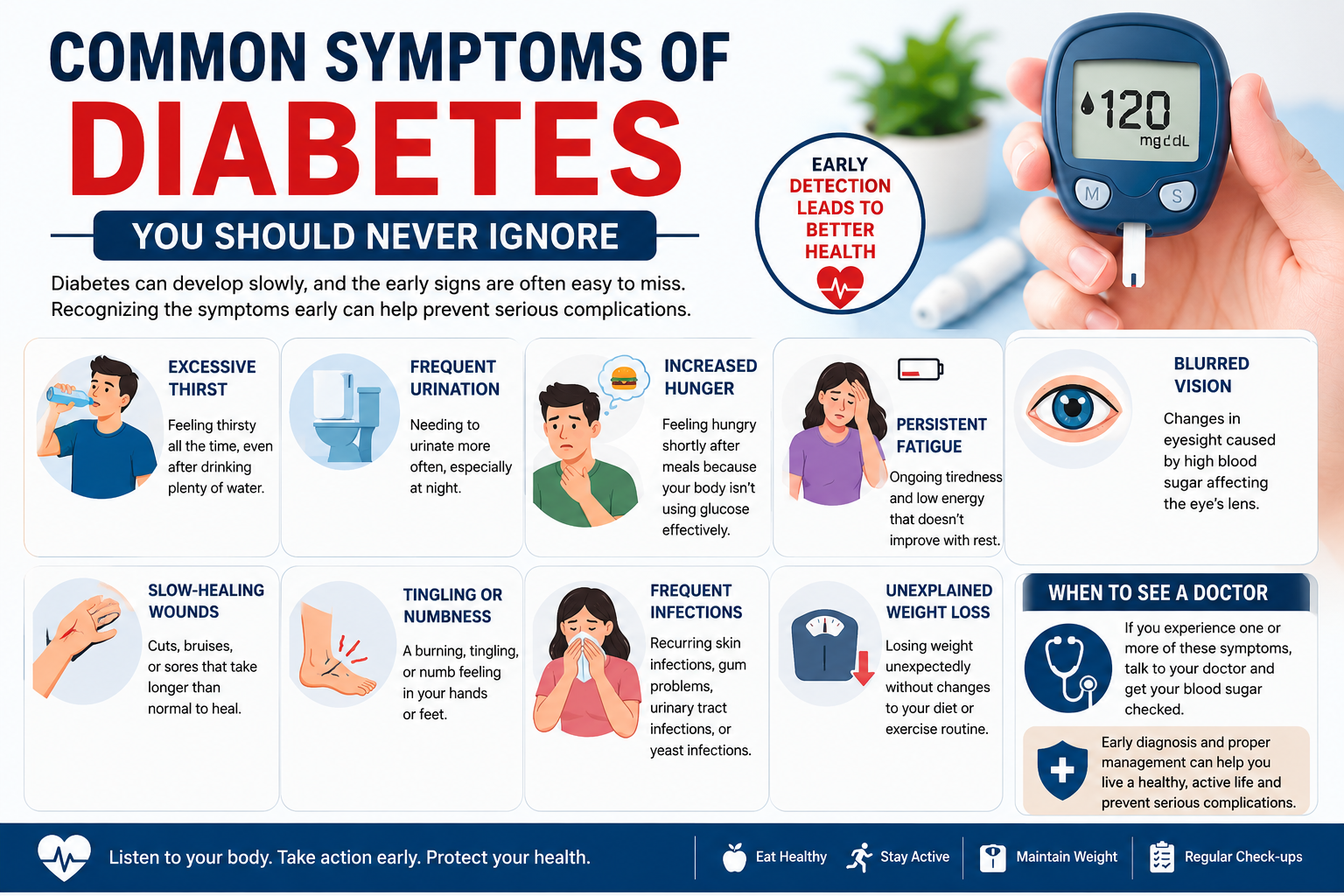
- Frequent urination – Needing to use the bathroom more often than usual, especially during the night.
- Excessive thirst – Feeling constantly thirsty even after drinking plenty of water.
- Increased hunger – Feeling hungry shortly after meals because your body isn’t using glucose effectively.
- Persistent fatigue – Ongoing tiredness and low energy that doesn’t improve with rest.
- Blurred vision – Changes in eyesight caused by high blood sugar affecting the eye’s lens.
- Slow-healing wounds – Cuts, bruises, or sores that take longer than normal to heal.
- Tingling or numbness – A burning, tingling, or numb sensation in the hands or feet, which may signal early nerve damage.
- Frequent infections – Recurring skin infections, gum problems, urinary tract infections, or yeast infections.
- Unexplained weight loss – Losing weight unexpectedly without changes to your diet or exercise routine.
When to See a Doctor
If you notice one or more of these diabetes symptoms, it’s important to consult a healthcare professional. Early diagnosis and proper blood sugar management can help prevent complications and improve long-term health outcomes.
The sooner diabetes is detected, the easier it is to manage and control.
Conclusion
Diabetes is a serious health condition, but with the right knowledge and timely action, it can be effectively managed. Understanding the symptoms, causes, and risk factors of diabetes is the first step toward protecting your health and preventing long-term complications.
Many early signs of diabetes, such as frequent urination, excessive thirst, fatigue, and blurred vision, can be easy to ignore. However, paying attention to these warning signs and seeking medical advice early can make a significant difference. Early diagnosis often leads to better blood sugar control and reduces the risk of complications affecting the heart, kidneys, eyes, and nerves.
If you are experiencing symptoms of diabetes or have risk factors for the condition, don’t wait to get checked. Regular health screenings, healthy lifestyle choices, and proper medical care can help you stay in control of your health. Remember, early detection and proactive management are the keys to living a healthier life with diabetes.
Read More:
- Heart Disease: Causes & Symptoms, Diagnosis
- Eye Redness Causes, Symptoms Treatment
- Dizziness Reasons Symptoms and Causes Treatment

Welcome to Health Line Tips! I’m Mazhar Hayyat, an AI-Powered SEO, and Content Writer with 4 years of experience. I help websites rank higher, get more traffic, and look amazing. My goal is to make SEO and web design simple and effective for everyone. Let’s achieve more together!