
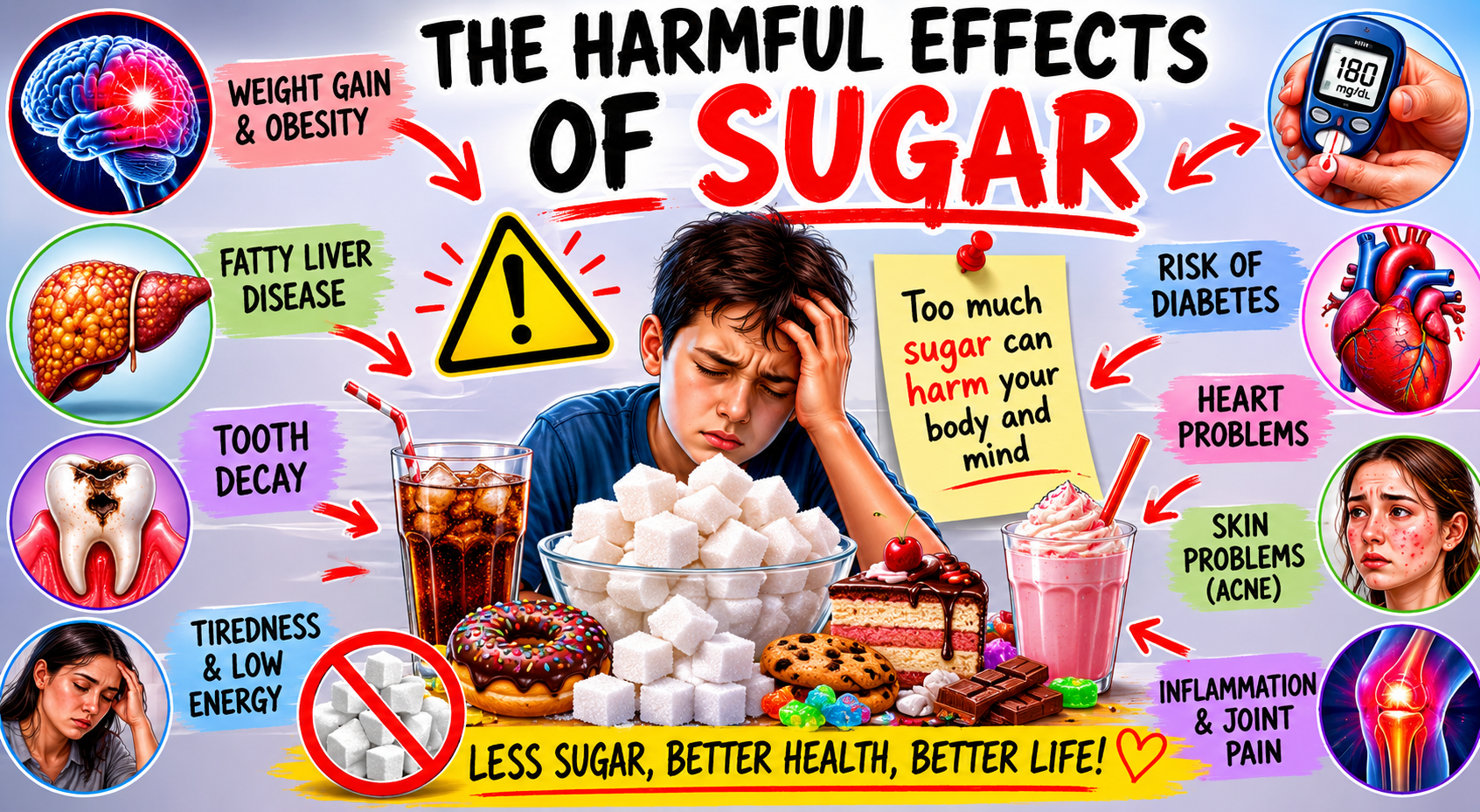
Sugar has become an unavoidable part of modern diets. From soft drinks and desserts to breakfast cereals and packaged snacks, added sugar is hidden in countless foods that people consume every day. While sugar provides a quick source of energy, excessive sugar consumption can have serious consequences for overall health.
Many people are aware that eating too much sugar can lead to weight gain, but the effects of sugar on the body go far beyond obesity. Scientific research has linked high sugar intake to diabetes, heart disease, fatty liver disease, tooth decay, chronic inflammation, and even mental health issues.
This comprehensive guide explores the harmful effects of sugar, explains why excess sugar is dangerous, and provides practical tips to reduce sugar intake for a healthier lifestyle.
What Is Sugar?
Sugar is a type of carbohydrate that the body converts into glucose, which serves as a primary energy source. Sugar occurs naturally in foods such as fruits, vegetables, and dairy products. However, most health concerns are associated with added sugar, which manufacturers add to foods and beverages during processing.
Common sources of added sugar include:
- Soft drinks
- Energy drinks
- Candy and chocolate
- Cakes and pastries
- Sweetened yogurt
- Ice cream
- Breakfast cereals
- Packaged fruit juices
- Flavored coffee drinks
- Processed snacks
The problem is not natural sugar found in whole foods but the excessive consumption of added sugars found in processed products.
How Excess Sugar Affects the Body
When sugar is consumed, blood glucose levels rise. The pancreas releases insulin to help move glucose into cells for energy. Frequent consumption of sugary foods and drinks forces the body to repeatedly produce large amounts of insulin.
Over time, this can disrupt normal metabolic processes and increase the risk of several chronic diseases.
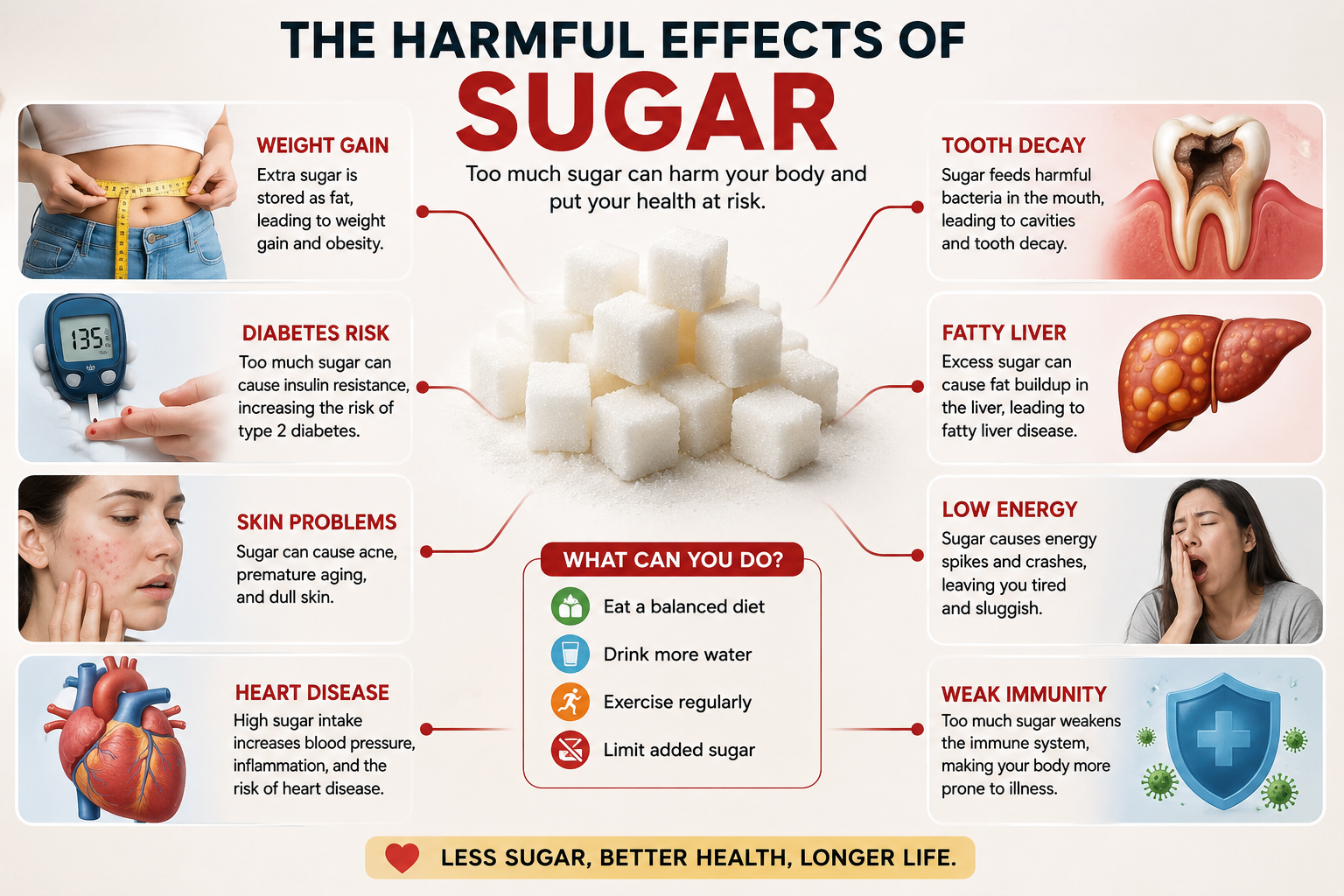
1. Sugar Causes Weight Gain and Obesity
One of the most well-known harmful effects of sugar is weight gain.
Sugary foods are often high in calories but low in nutritional value. Unlike protein and fiber-rich foods, sugar does not keep you full for long. As a result, people tend to consume more calories than their bodies need.
Soft drinks are particularly problematic because liquid calories do not provide the same feeling of fullness as solid foods.
Why Sugar Leads to Weight Gain
- Increases calorie intake
- Promotes fat storage
- Encourages overeating
- Reduces feelings of fullness
- Contributes to abdominal fat accumulation
Excess belly fat is strongly associated with metabolic disorders and cardiovascular disease.
2. Sugar Increases the Risk of Type 2 Diabetes
There is a strong connection between sugar and diabetes.
Consistently consuming high amounts of sugar can contribute to insulin resistance. This condition occurs when cells stop responding properly to insulin, forcing the pancreas to produce even more insulin.
Over time, insulin resistance can progress into Type 2 diabetes.
Warning Signs of Insulin Resistance
- Frequent hunger
- Fatigue after meals
- Increased thirst
- Weight gain around the abdomen
- Difficulty losing weight
Reducing added sugar intake is one of the most effective ways to lower diabetes risk.
3. Excess Sugar Damages Heart Health
Many people associate heart disease with fatty foods, but excessive sugar intake can be equally harmful.
Research suggests that diets high in added sugar may contribute to:
- High blood pressure
- Increased triglycerides
- Chronic inflammation
- Elevated cholesterol levels
- Greater risk of heart disease
Individuals who regularly consume sugary beverages often have a significantly higher risk of cardiovascular problems than those who limit sugar intake.
4. Sugar Can Cause Fatty Liver Disease
The liver plays a vital role in processing nutrients, including sugar.
Large amounts of fructose, a common component of added sugar, are processed primarily by the liver. When fructose intake becomes excessive, the liver converts it into fat.
This can lead to:
Non-Alcoholic Fatty Liver Disease (NAFLD)
NAFLD occurs when fat accumulates in the liver despite little or no alcohol consumption.
Symptoms may include:
- Fatigue
- Abdominal discomfort
- Weakness
- Elevated liver enzymes
Fatty liver disease is becoming increasingly common due to modern diets high in sugar and processed foods.
5. Sugar Causes Tooth Decay and Cavities
One of the earliest known side effects of sugar is dental damage.
Bacteria in the mouth feed on sugar and produce acids that attack tooth enamel. Repeated exposure weakens the enamel and increases the risk of cavities.
How Sugar Harms Teeth
- Feeds harmful oral bacteria
- Produces enamel-damaging acids
- Increases cavity formation
- Leads to tooth decay
- Contributes to gum disease
Good oral hygiene and limiting sugary snacks can significantly improve dental health.
6. Sugar Triggers Energy Crashes
Many people consume sugary foods for a quick energy boost. However, the effect is usually temporary.
After blood sugar rises rapidly, it often drops just as quickly, causing what is commonly called a sugar crash.
Symptoms may include:
- Fatigue
- Brain fog
- Irritability
- Poor concentration
- Mood swings
Replacing sugary snacks with protein-rich foods can help maintain stable energy levels throughout the day.
7. Sugar Accelerates Skin Aging
The effects of sugar are not limited to internal organs. Excess sugar can also affect appearance and skin health.
High sugar levels contribute to a process known as glycation, which damages collagen and elastin proteins responsible for keeping skin firm and youthful.
Effects of Sugar on the Skin
- Premature wrinkles
- Loss of skin elasticity
- Increased inflammation
- Acne flare-ups
- Dull complexion
Reducing sugar intake may improve skin quality and slow visible aging.
8. Sugar Promotes Chronic Inflammation
Inflammation is a natural immune response, but chronic inflammation can damage healthy tissues and organs.
Research has linked excessive sugar consumption to increased inflammatory markers in the body.
Long-term inflammation is associated with:
- Heart disease
- Diabetes
- Arthritis
- Obesity
- Certain cancers
A diet rich in whole foods and low in added sugar can help reduce inflammation.
9. Sugar May Affect Mental Health
Emerging research suggests a connection between high sugar intake and mental health challenges.
Frequent blood sugar fluctuations may influence mood, energy levels, and cognitive function.
Potential effects include:
- Anxiety
- Depression
- Irritability
- Mood instability
- Reduced concentration
Although sugar is not the sole cause of mental health disorders, excessive intake may contribute to poor emotional well-being.
10. Sugar Can Increase the Risk of Chronic Diseases
Many chronic illnesses share common risk factors, including obesity, inflammation, and insulin resistance.
Because excessive sugar contributes to all three, it indirectly increases the likelihood of developing numerous long-term health conditions.
These include:
- Type 2 diabetes
- Heart disease
- Stroke
- Fatty liver disease
- Kidney disease
- Metabolic syndrome
How Much Sugar Should You Consume Daily?
Health experts recommend limiting added sugar consumption.
Recommended Daily Limits
Men: Up to 36 grams (9 teaspoons)
Women: Up to 25 grams (6 teaspoons)
Children: Even less, depending on age
Unfortunately, many people consume far more than these recommendations without realizing it.
Practical Ways to Reduce Sugar Intake
Reducing sugar does not mean eliminating all enjoyable foods.
Effective Strategies
✔ Drink water instead of soda
✔ Choose whole fruits over sweets
✔ Read nutrition labels carefully
✔ Avoid sugary breakfast cereals
✔ Reduce sugar gradually in tea and coffee
✔ Limit processed foods
✔ Increase protein and fiber intake
✔ Prepare homemade meals more often
Small daily changes can produce significant long-term health benefits.
Final Thoughts
Sugar is not inherently harmful when consumed in moderation. However, excessive sugar consumption has been linked to a wide range of health problems, including obesity, diabetes, heart disease, fatty liver disease, tooth decay, inflammation, and premature aging.
Understanding the harmful effects of sugar empowers individuals to make healthier dietary choices. By reducing added sugar intake and focusing on nutrient-dense foods, people can improve their overall health, maintain a healthy weight, and lower the risk of chronic disease.
The goal is not to eliminate sugar entirely but to develop a balanced approach that supports long-term health and well-being.
FAQ
Is sugar bad for your health?
Excessive sugar consumption can increase the risk of obesity, diabetes, heart disease, fatty liver disease, and tooth decay.
What happens when you stop eating sugar?
Many people experience improved energy levels, better weight management, reduced cravings, and more stable blood sugar levels.
How much sugar is too much per day?
Most health organizations recommend limiting added sugar to 25–36 grams per day, depending on age and gender.
Which foods contain hidden sugar?
Soft drinks, breakfast cereals, flavored yogurt, sauces, packaged snacks, fruit juices, and processed foods often contain hidden added sugars.
Can eating too much sugar cause diabetes?
Excessive sugar intake can contribute to weight gain and insulin resistance, both of which increase the risk of Type 2 diabetes.
Learn More Information: