
Back pain doesn’t discriminate it affects millions of men and women every year cutting across age groups, lifestyles, and professions. Whether it’s a dull ache after a long day at your desk or a sharp, shooting pain that stops you in your tracks, back pain is one of the leading reasons people visit doctors and miss work worldwide. Yet despite how common it is many people still don’t know what’s causing their pain or how to properly treat it.
The good news? In most cases, back pain is manageable. With the right knowledge, a proactive approach and timely care, most people recover fully often without surgery. This guide breaks down everything you need to know: what causes back pain in both men and women, when to take it seriously, and which treatments actually work.
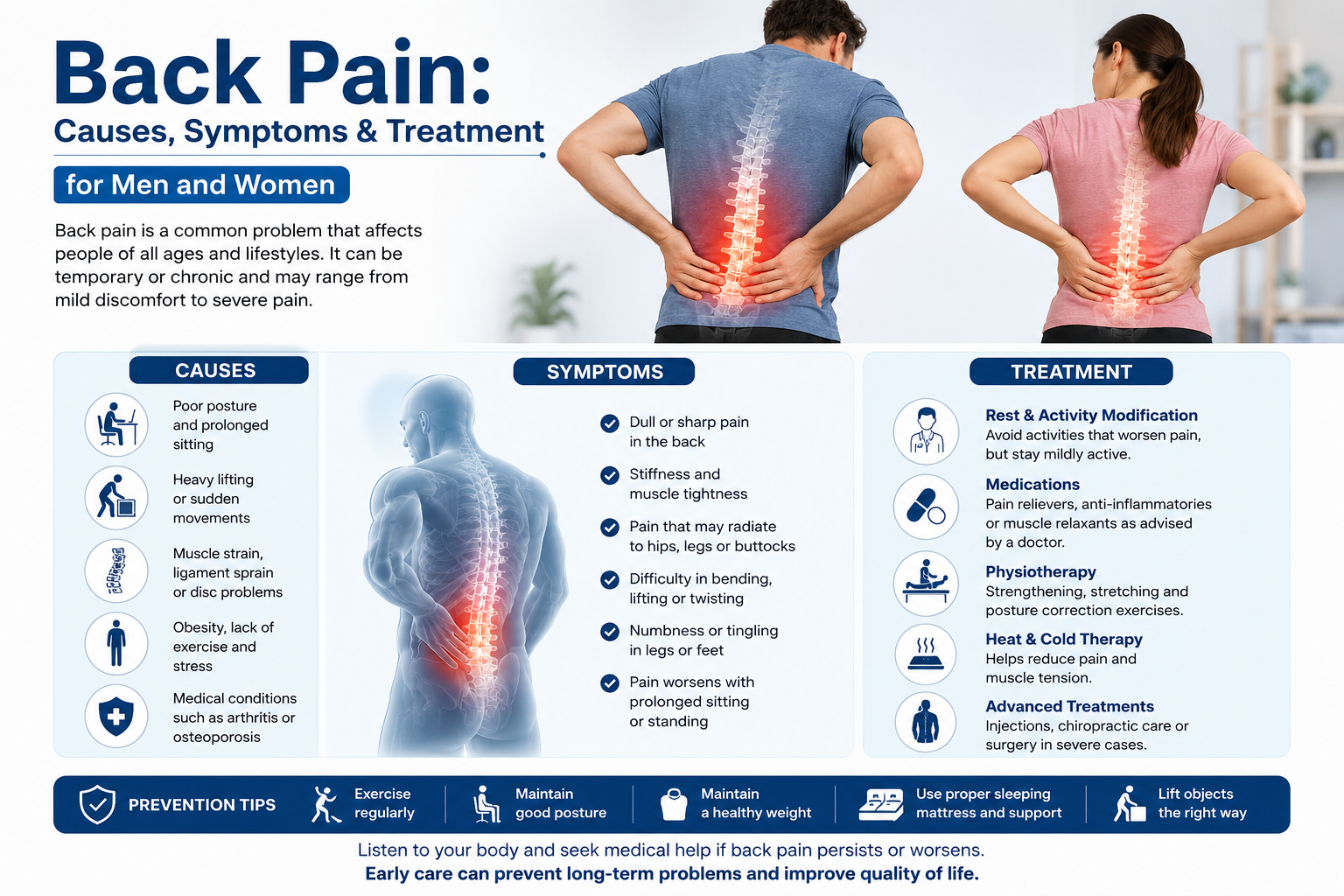
Overview
Back pain ranks among the most common reasons people seek medical attention or take time off work. It is a leading cause of disability globally yet for the majority of people under 60, it is both preventable and treatable.
When prevention isn’t enough, simple home remedies and proper body mechanics can resolve most cases within a few weeks. Surgery is rarely necessary. Understanding your back pain its source, its signals, and its solutions is the first step toward lasting relief.
Symptoms of Back Pain
Back pain presents differently from person to person. Common symptoms include:
- A persistent muscle ache in the lower or upper back
- A shooting, burning, or stabbing sensation
- Pain that radiates down one or both legs
- Discomfort that worsens with bending, twisting, lifting, standing, or walking
Both men and women experience these symptoms, though the underlying cause can sometimes differ for example, women may experience back pain related to menstrual cycles, pregnancy, or endometriosis, while men are more prone to certain types of spinal degeneration due to occupational strain.
When to See a Doctor
Most back pain resolves on its own with rest, gentle movement, and home care typically within a few weeks. However, you should contact a healthcare professional if your back pain:
- Lasts longer than a few weeks without improvement
- Is severe and does not ease with rest
- Spreads down one or both legs, particularly below the knee
- Causes weakness, numbness, or tingling in the legs
- Is accompanied by unexplained weight loss
Seek immediate medical care if your back pain:
- Causes new bowel or bladder problems
- Is accompanied by a fever
- Follows a fall, direct blow, or injury to the back
These may be signs of a more serious underlying condition requiring urgent attention.
Common Causes of Back Pain
Back pain can stem from dozens of sources. The most frequent include:
- Muscle or ligament strain – caused by heavy lifting, sudden awkward movements, or prolonged poor posture
- Slipped (herniated) disc – when disc material presses on nearby nerves
- Sciatica – a trapped or irritated sciatic nerve causing pain that runs from the lower back down the leg
- Arthritis and spinal stenosis – narrowing of the space around the spinal cord
- Ankylosing spondylitis – a form of inflammatory arthritis affecting the spine
- Osteoporosis – more common in women post-menopause, where weakened bones can lead to fractures
In rare cases, back pain may signal something more serious such as a spinal infection, fracture, or cancer reasons why persistent or unusual pain should never be ignored.
Treatment Options for Men and Women
At-Home Remedies (First Line of Treatment)
- Stay active — bed rest for extended periods worsens recovery; gentle movement is key
- Anti-inflammatory medication such as ibuprofen can reduce pain and swelling (not suitable for everyone — check with a pharmacist)
- Ice packs (wrapped in a cloth) to reduce acute inflammation
- Heat packs or a hot water bottle to relieve muscle spasms and joint stiffness
- Stretching and back-specific exercises, including yoga and pilates
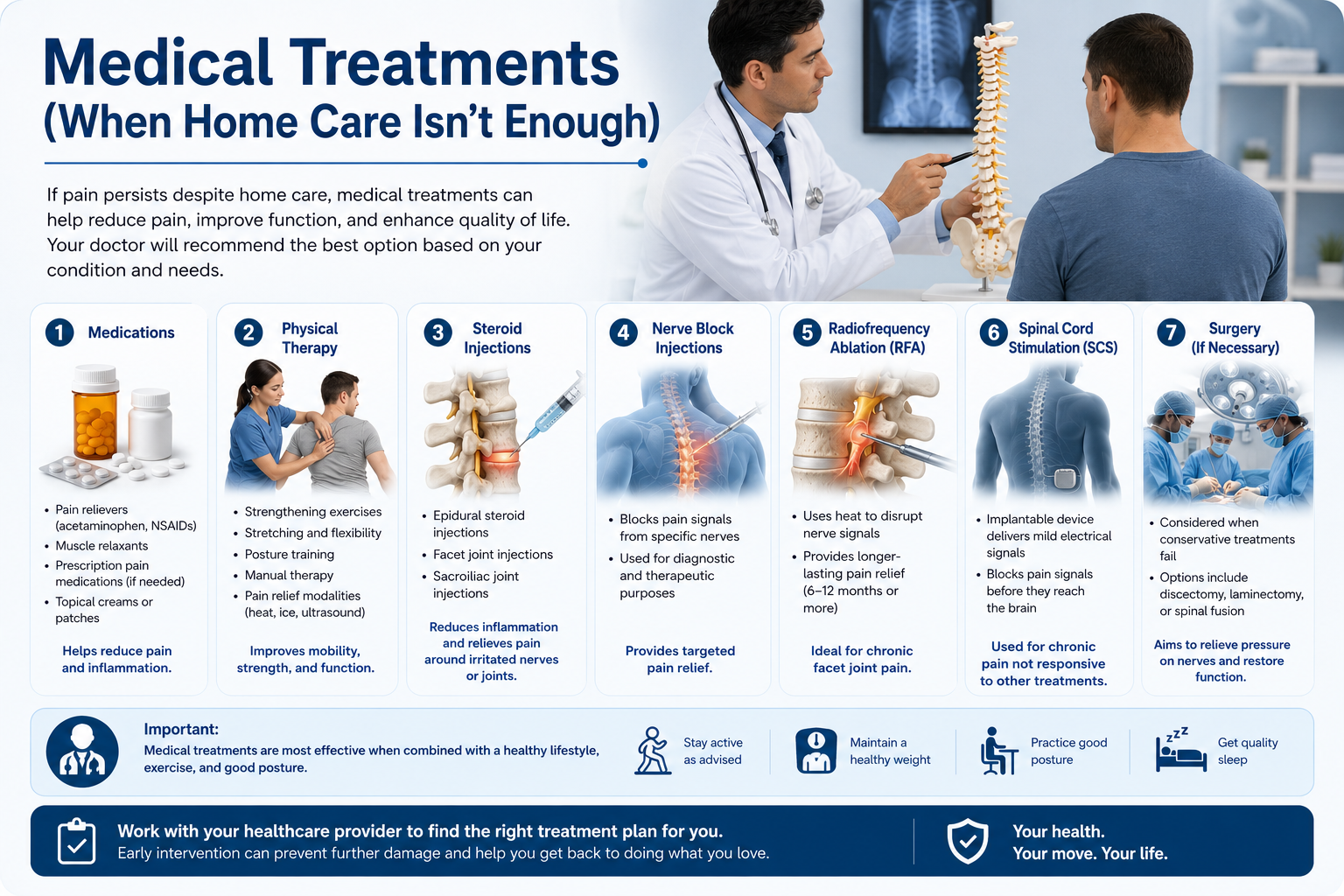
Medical Treatments (When Home Care Isn’t Enough)
- Physiotherapy — guided exercise programs to strengthen supporting muscles
- Manual therapy — hands-on treatment by a trained therapist to mobilize joints and soft tissue
- Cognitive Behavioural Therapy (CBT) — to help patients manage chronic pain psychologically
- Prescription medication — stronger pain relief for severe or persistent cases
- Nerve block procedures — sealing off pain-sending nerves for long-term lower back pain
- Surgery — considered only when a structural cause (like a herniated disc) hasn’t responded to other treatments
Prevention Tips
- Maintain a healthy weight to reduce spinal load
- Strengthen your core muscles through regular exercise
- Use correct posture when sitting, standing, and lifting
- Avoid prolonged sitting — take movement breaks every 30–60 minutes
- Choose a supportive mattress and sleeping position
Final Thought
Back pain is common — but it doesn’t have to be a life sentence. Whether you’re dealing with a recent injury or a long-standing ache, the right combination of self-care, professional guidance, and healthy habits can make a profound difference. Listen to your body, act early, and don’t hesitate to seek help when the pain speaks louder than usual.
Read More Information:
- Dry Cough Home Remedies, Where to Buy, and When to
- Nausea Causes, Treatment, & Prevention
- Eye Redness Causes and Treatment
- Fatigue Symptoms, Causes, Types, and Treatment

Welcome to Health Line Tips! I’m Mazhar Hayyat, an AI-Powered SEO, and Content Writer with 4 years of experience. I help websites rank higher, get more traffic, and look amazing. My goal is to make SEO and web design simple and effective for everyone. Let’s achieve more together!