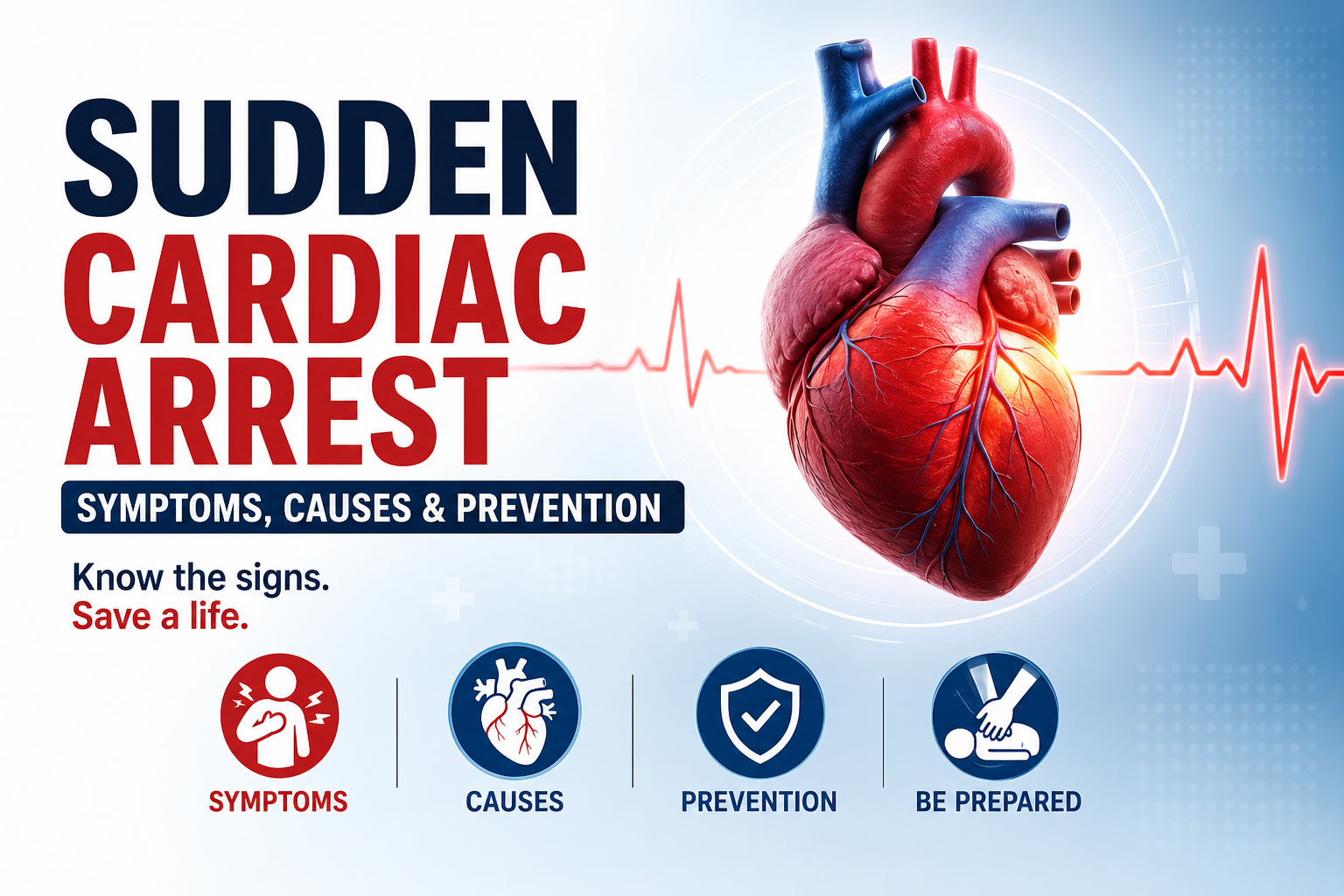
Every year, hundreds of thousands of people around the world experience Sudden Cardiac Arrest (SCA). Many victims appear perfectly healthy moments before collapse, making this condition one of the most frightening medical emergencies. Unlike many other health problems, sudden cardiac arrest can cause death within minutes if immediate action is not taken.
The encouraging news is that survival rates can improve dramatically when people recognize the warning signs, start CPR quickly, and use an Automated External Defibrillator (AED) as soon as possible.
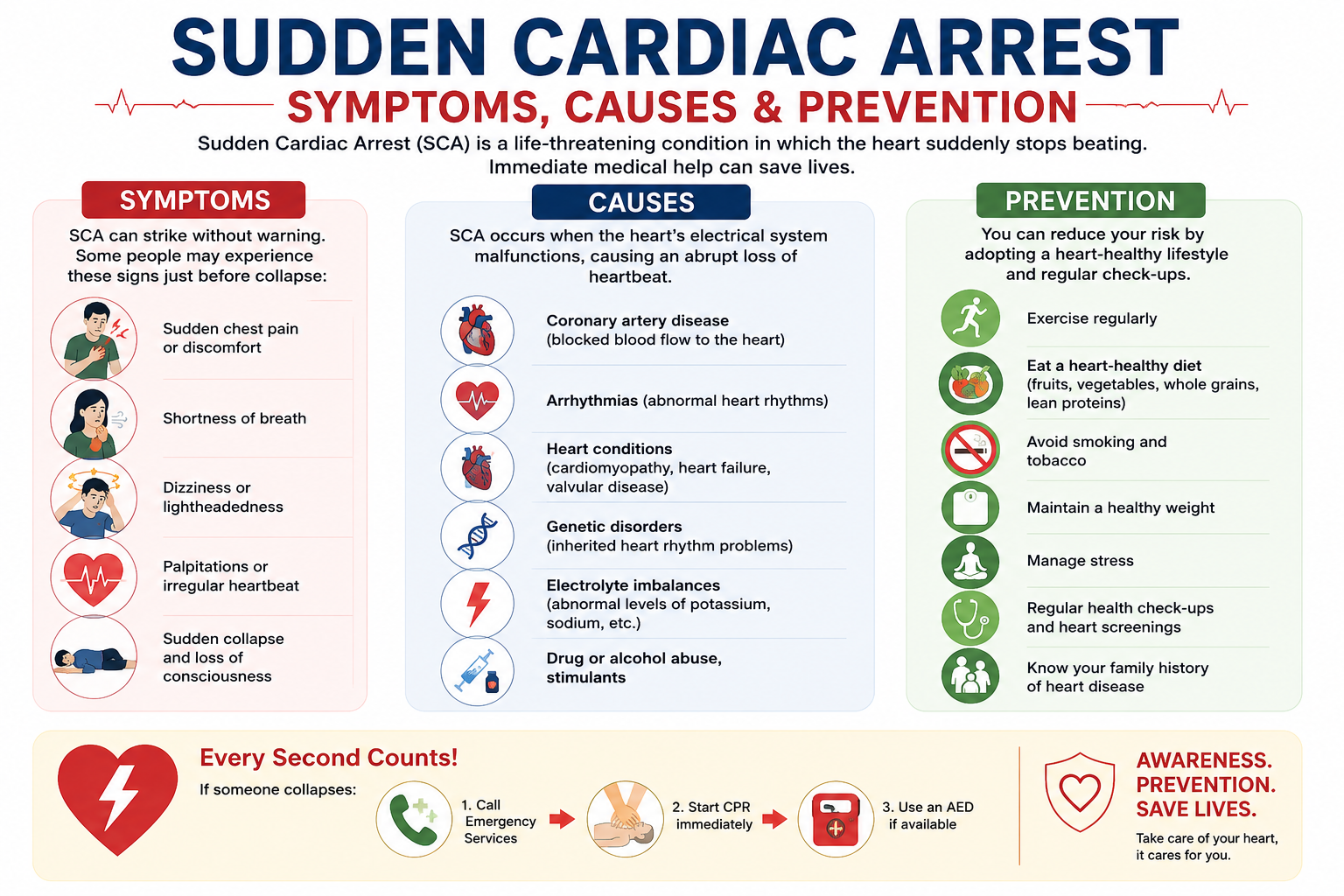
This comprehensive guide explains the symptoms, causes, pathophysiology, treatment, prevention, and survival strategies related to sudden cardiac arrest.
What Is Sudden Cardiac Arrest?
Sudden Cardiac Arrest (SCA) is a life-threatening medical emergency in which the heart suddenly stops pumping blood effectively due to an electrical malfunction. As a result, blood flow to the brain, lungs, and other vital organs stops almost immediately.
Without oxygen-rich blood, a person quickly loses consciousness and stops breathing normally. If treatment is not started within minutes, permanent brain damage and death can occur.
What Happens Inside the Body?
- Blood circulation stops instantly.
- The brain is deprived of oxygen.
- Loss of consciousness occurs within 10–20 seconds.
- Brain cells begin to die after 4–6 minutes.
- Permanent brain injury or death may occur within 8–10 minutes without intervention.
High-quality CPR helps maintain blood flow to the brain and heart until advanced medical care becomes available.
Pathophysiology of Sudden Cardiac Arrest
Understanding the pathophysiology of sudden cardiac arrest helps explain why immediate treatment is so important.
In most cases, the heart’s electrical system becomes unstable and develops a dangerous arrhythmia, such as ventricular fibrillation (VF) or ventricular tachycardia (VT). Instead of pumping blood normally, the heart begins to quiver or beat so rapidly that effective circulation stops.
The Process Step by Step
- Electrical instability develops in the heart.
- Ventricular fibrillation or ventricular tachycardia occurs.
- Cardiac output falls to nearly zero.
- Blood flow to vital organs stops.
- Oxygen deprivation begins.
- Brain cells start dying within minutes.
- Multi-organ failure develops.
- Death occurs without rapid intervention.
This is why every minute matters during a cardiac arrest emergency.
Cardiac Arrest vs. Heart Attack
Many people mistakenly believe that cardiac arrest and heart attack are the same condition. While they are related, they are not identical.
Heart Attack
A heart attack occurs when blood flow to a part of the heart muscle is blocked, usually due to a clogged coronary artery.
Common symptoms include:
- Chest pain or pressure
- Pain spreading to the arm, jaw, or back
- Sweating
- Nausea
- Shortness of breath
The heart usually continues beating during a heart attack.
Sudden Cardiac Arrest
Sudden cardiac arrest is an electrical problem rather than a circulation problem.
Common signs include:
- Sudden collapse
- Loss of consciousness
- No normal breathing
- No pulse
- Immediate medical emergency
A heart attack can sometimes trigger sudden cardiac arrest, but many cardiac arrests occur without a heart attack.
Symptoms of Sudden Cardiac Arrest
The most common symptom is sudden collapse. However, some people experience warning signs before the event.
Immediate Symptoms
- Sudden collapse
- Loss of consciousness
- No pulse
- No breathing
- Gasping or agonal breathing
- Seizure-like movements
Early Warning Signs
Some individuals experience symptoms minutes, hours, or even days beforehand.
These may include:
- Chest discomfort
- Shortness of breath
- Heart palpitations
- Dizziness
- Unexplained fainting
- Extreme fatigue
- Irregular heartbeat
Anyone experiencing these symptoms should seek medical evaluation promptly.
Causes of Sudden Cardiac Arrest
Several conditions can disrupt the heart’s electrical system and lead to sudden cardiac arrest.
1. Coronary Artery Disease (CAD)
Coronary artery disease is the leading cause of sudden cardiac arrest. Plaque buildup narrows the arteries supplying blood to the heart, increasing the risk of dangerous arrhythmias.
2. Previous Heart Attack
Scar tissue left behind after a heart attack can interfere with electrical signals and trigger abnormal heart rhythms.
3. Cardiomyopathy
Diseases that enlarge, thicken, or weaken the heart muscle can increase the risk of cardiac arrest.
4. Ventricular Fibrillation
Ventricular fibrillation is the most common rhythm responsible for sudden cardiac arrest. The heart quivers instead of pumping blood effectively.
5. Genetic Heart Conditions
Inherited disorders such as Long QT Syndrome, Brugada Syndrome, and hypertrophic cardiomyopathy can increase risk, especially in younger individuals.
6. Electrolyte Imbalances
Abnormal levels of potassium, calcium, or magnesium can interfere with electrical activity in the heart.
7. Drug Overdose
Certain drugs, especially stimulants such as cocaine and methamphetamine, can trigger life-threatening arrhythmias.
8. Severe Trauma
Rarely, a strong blow to the chest at a critical moment can cause sudden cardiac arrest, a phenomenon known as commotio cordis.
Risk Factors
Several factors increase the likelihood of sudden cardiac arrest.
Medical Risk Factors
- Coronary artery disease
- Previous heart attack
- Heart failure
- Cardiomyopathy
- Arrhythmias
- Congenital heart disease
Lifestyle Risk Factors
- Smoking
- Physical inactivity
- Obesity
- Excessive alcohol consumption
- Poor diet
Additional Risk Factors
- Family history of sudden cardiac death
- Diabetes
- High blood pressure
- High cholesterol
- Sleep apnea
- Chronic kidney disease
The Chain of Survival
Medical organizations around the world promote the “Chain of Survival” to improve outcomes after sudden cardiac arrest.
1. Early Recognition
Recognize the emergency immediately and call emergency services.
2. Early CPR
Begin high-quality chest compressions without delay.
3. Rapid Defibrillation
Use an AED as soon as one becomes available.
4. Advanced Life Support
Healthcare professionals provide medications, airway support, and advanced interventions.
5. Post-Cardiac Arrest Care
Specialized hospital treatment helps improve recovery and reduce complications.
6. Recovery and Rehabilitation
Long-term rehabilitation supports physical, neurological, and emotional recovery.
What To Do If Someone Has a Cardiac Arrest
Quick action can save a life.
Step 1: Check Responsiveness
Tap the person’s shoulders and ask loudly if they are okay.
Step 2: Call Emergency Services
Call local emergency services immediately or ask someone nearby to do so.
Step 3: Start CPR
Place your hands in the center of the chest.
- Push hard and fast.
- Compress at a rate of 100–120 times per minute.
- Allow full chest recoil.
Step 4: Give Rescue Breaths (If Trained)
After every 30 chest compressions, provide 2 rescue breaths.
If you are not trained, continue hands-only CPR.
Step 5: Use an AED
If an AED is available:
- Turn it on.
- Follow the voice instructions.
- Apply the pads.
- Deliver a shock if advised.
- Resume CPR immediately afterward.
Treatment of Sudden Cardiac Arrest
Successful treatment depends on restoring circulation as quickly as possible.
CPR
Cardiopulmonary resuscitation helps maintain blood flow to vital organs.
Defibrillation
Defibrillation uses an electrical shock to restore a normal heart rhythm.
Advanced Cardiac Life Support (ACLS)
Healthcare providers may administer medications and advanced airway management.
Implantable Cardioverter Defibrillator (ICD)
High-risk patients may benefit from an ICD, which can automatically correct dangerous heart rhythms.
Survival Rates and Outcomes
Survival depends largely on how quickly treatment begins.
Key Statistics
- Survival without CPR is typically below 10%.
- Immediate bystander CPR can double or triple survival rates.
- Early AED use can increase survival rates to over 50% in some cases.
- Faster treatment improves neurological recovery.
Every minute without CPR significantly reduces the chance of survival.
Prevention: How to Reduce Your Risk
While not every case can be prevented, many risk factors can be controlled.
Lifestyle Changes
- Exercise at least 150 minutes per week.
- Follow a heart-healthy diet.
- Maintain a healthy weight.
- Avoid smoking.
- Limit alcohol consumption.
- Get adequate sleep.
Medical Prevention
- Control blood pressure and cholesterol.
- Manage diabetes effectively.
- Attend regular medical checkups.
- Undergo cardiac screening if you have a family history of heart disease.
- Follow prescribed treatment plans.
Community Prevention
- Increase CPR training.
- Improve access to AEDs in public places.
- Promote public awareness campaigns.
Frequently Asked Questions (FAQs)
Can a young person have sudden cardiac arrest?
Yes. Although more common in older adults, sudden cardiac arrest can affect young athletes and individuals with inherited heart conditions such as Long QT syndrome and hypertrophic cardiomyopathy.
Is sudden cardiac arrest the same as a heart attack?
No. A heart attack is caused by a blocked artery, while sudden cardiac arrest results from an electrical malfunction that stops the heart from pumping blood effectively.
Can sudden cardiac arrest be prevented?
Not all cases can be prevented, but maintaining a healthy lifestyle and managing heart disease risk factors can significantly reduce the risk.
What should I do if someone suddenly collapses?
Call emergency services immediately, begin CPR, and use an AED if available. Early intervention dramatically improves survival.
How effective is CPR?
Immediate CPR can double or even triple the chances of survival by maintaining blood flow to the brain and heart.
What is an AED?
An Automated External Defibrillator (AED) is a portable device that analyzes heart rhythms and delivers a shock when needed to restore a normal heartbeat.
Can sudden cardiac arrest happen during sleep?
Yes. Certain heart rhythm disorders, sleep apnea, and underlying heart disease can cause sudden cardiac arrest during sleep.
What is the survival rate of sudden cardiac arrest?
Survival rates vary, but early CPR and AED use significantly increase the chances of survival and recovery.
Is sudden cardiac arrest hereditary?
Some inherited conditions affecting the heart’s structure or electrical system can increase the risk of sudden cardiac arrest.
Can someone fully recover after sudden cardiac arrest?
Yes. Many people recover fully when CPR and defibrillation are provided quickly, minimizing damage to the brain and other organs.
Conclusion
Sudden cardiac arrest is one of the most serious medical emergencies, but it is not always fatal. Understanding the symptoms, causes, pathophysiology, treatment options, and prevention strategies can help save lives.
The most important lesson is simple: recognize the emergency, call for help, start CPR immediately, and use an AED if available. Every second counts, and the actions of a bystander can mean the difference between life and death.
Learning CPR today could save the life of a family member, friend, coworker, or complete stranger tomorrow.
Read More Information:
- Dry Cough Home Remedies, Where to Buy,
- Nausea Causes, Treatment, & Prevention
- Eye Redness Causes and Treatment